
Listen first. This week’s episode, above, tells the whole story. This page is the companion.
The idea in brief
Simone Weil, the French philosopher who died in 1943 at thirty-four, thought attention was misunderstood. In her essay on school studies, in Waiting for God, she says it is not effort. It is not the frown or the clenched jaw. It is a suspending of thought: leaving the mind empty, open and ready to receive whatever is actually there.
Bracing is the opposite posture. It grips the future and forces it into a shape before it arrives. Dread keeps a diary of things that haven’t happened yet, and it writes it with the same muscles attention needs slack.
Weil also gave a name to what dread is afraid of.
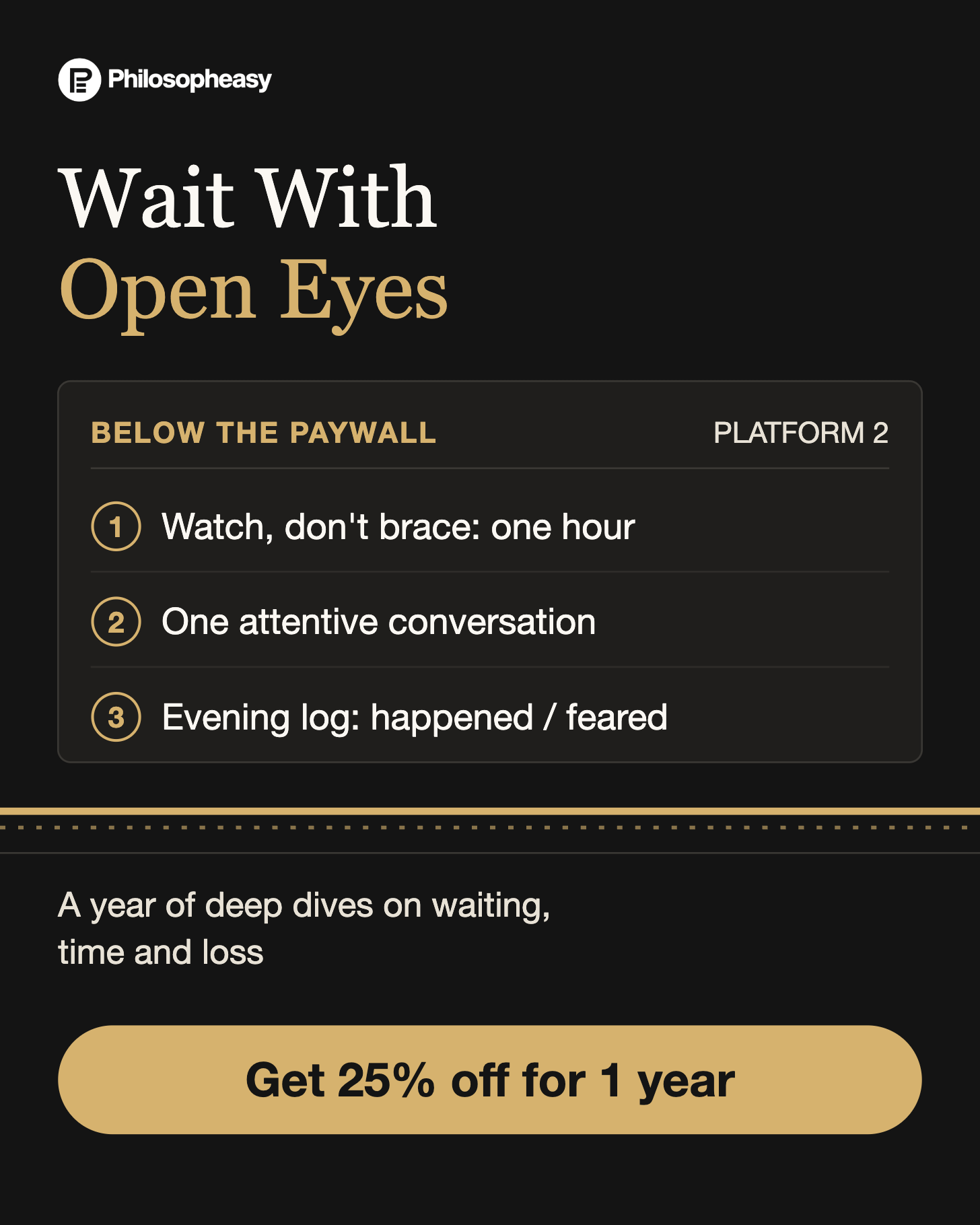
Below, for paid subscribers:
The 20 to 30 minute audio deep dive and this companion article
A one-page table of Weil’s terms, each with a first move out
Weil set against four pieces of familiar advice
Tool one: the “watch, don’t brace” hour, graded over three weeks
Tool two: a guide to one attentive conversation with the person you fear losing
Tool three: the evening log that separates what has happened from what is only feared
Where to read Weil next, with real works named
Weekly PhiloDose videos, the monthly live masterclass and the whole archive