


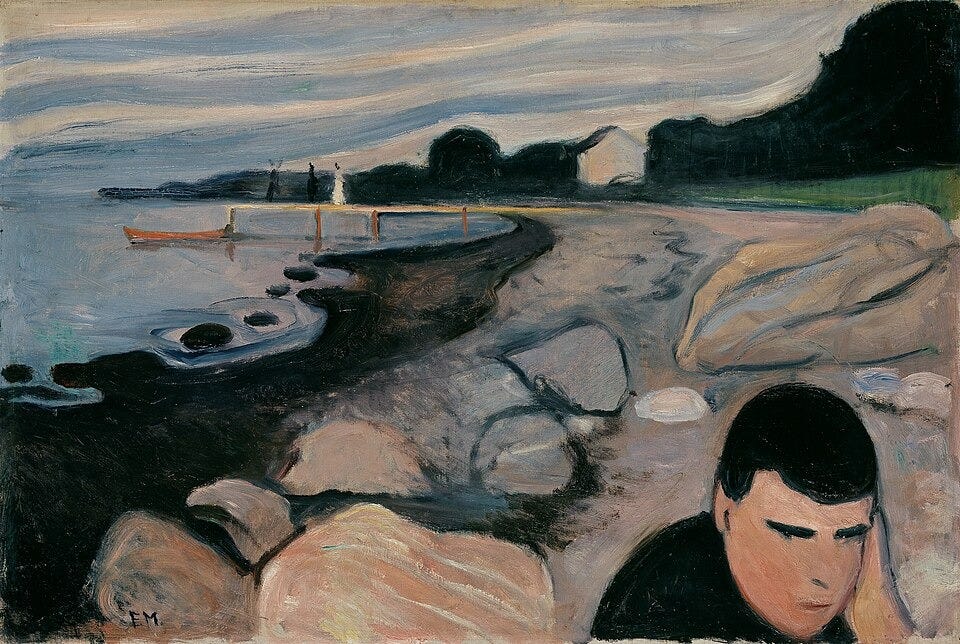
A bottle of wine arrives at Daniel’s door on a Thursday. The card says, in his former business partner’s handwriting, “Time to let bygones be bygones.”
Three years ago that partner moved the company’s clients to a new firm and left Daniel with the debts. He has never mentioned it since. Daniel puts the bottle on the counter and finds he cannot open it.
He tells himself he is being petty. The video above asks why that doubt is so often wrong. Here is the longer story.
Where the puzzle comes from
The paradox is old, but it has had sharp formulations in the last century. The French philosopher Vladimir Jankélévitch wrestled with it in the essay Pardonner?, published in 1971 and translated as “Should We Pardon Them?”. He wrote it during the argument over whether crimes of the Nazi era should expire under a statute of limitations. His worry was that pardon becomes obscene when the crime is vast and no one has asked for it.
Hannah Arendt came at it from another side in The Human Condition (1958). She saw forgiveness as the thing that lets people begin again, since without it we would be trapped by the consequences of what we have done. She also noted that people cannot forgive what they cannot punish, and cannot punish what turns out to be unforgivable.
Jacques Derrida pushed it to the edge in On Forgiveness, which appears in the 2001 volume Cosmopolitanism and Forgiveness. His claim is that forgiveness, if it exists at all, forgives the unforgivable. Forgiving only what is easily forgiven is hardly forgiveness.
Further back, Joseph Butler preached on resentment and the forgiveness of injuries in his Fifteen Sermons (1726). He argued that resentment against real wrong is not a vice. What matters is that it does not turn into revenge.
What the paradox actually teaches
It does not teach that forgiveness is impossible. It teaches that forgiveness is not a reflex.
If the wrong was small, there is little to forgive. If it was large, the word has to carry real weight, and weight cannot be lifted by a card and a bottle. Forgiveness is only coherent when the wrong is named at its true size first.
That is where Bonhoeffer comes in. In The Cost of Discipleship (1937), written while he was training pastors for the Confessing Church in Nazi Germany, he drew a line between cheap grace and costly grace. Cheap grace is pardon without repentance, forgiveness as a standing policy with nothing asked of anyone. Costly grace costs something: the wrongdoer’s old way of life, and the burden the wronged person carries.
Seen this way, Daniel’s hesitation is not petty. The pardon on offer has skipped every step that would make it mean something.
Three tools
The Size Test. Before deciding whether to forgive, say what was done in one plain sentence with no softeners. If you cannot say it, you cannot yet forgive it, and neither can anyone ask you to. If the other person has never said it, the apology has not started.
The Receipt Question. Ask what the apology cost the person who gave it. A changed practice, a returned sum, a hard conversation held in public and not in private: these are receipts. A smile, a gift or a general regret leaves no receipt. You may still choose to be gracious, but you will know what you are being gracious about.
The Two Doors. People often feel there are only two choices, forgive now or never forgive. Bonhoeffer’s distinction suggests a third. You can release your own bitterness without declaring the account closed. You can wish the other person well and still decline the reunion they have staged. Releasing yourself does not require pretending that the debt was paid.
How this ties to the week
This week’s essay is about Bonhoeffer’s cheap grace and the polished apology that changes nothing. This piece is its small cousin. The essay explains the idea. The paradox explains why the idea matters: if forgiveness has no price, it has no meaning, and the person who senses the missing price is reading the situation correctly.
Daniel eventually puts the card in a drawer. He does not throw it away, and he does not reply. A week later he writes a short note: “When you can tell me what happened, I’ll listen.” It is not bitterness. It is the first honest sentence either of them has offered.
Forgiveness may still come. But it can only arrive through the door the harm made, and that door opens from both sides.
Where in your life has “let it go” been said to you before anyone said what happened? Tell us in the comments.

Sources:
Dietrich Bonhoeffer, The Cost of Discipleship (Nachfolge, 1937)
Vladimir Jankélévitch, Pardonner? (1971), English: “Should We Pardon Them?”
Hannah Arendt, The Human Condition (1958)
Jacques Derrida, On Forgiveness, in Cosmopolitanism and Forgiveness (2001)
Joseph Butler, Fifteen Sermons Preached at the Rolls Chapel (1726)


