


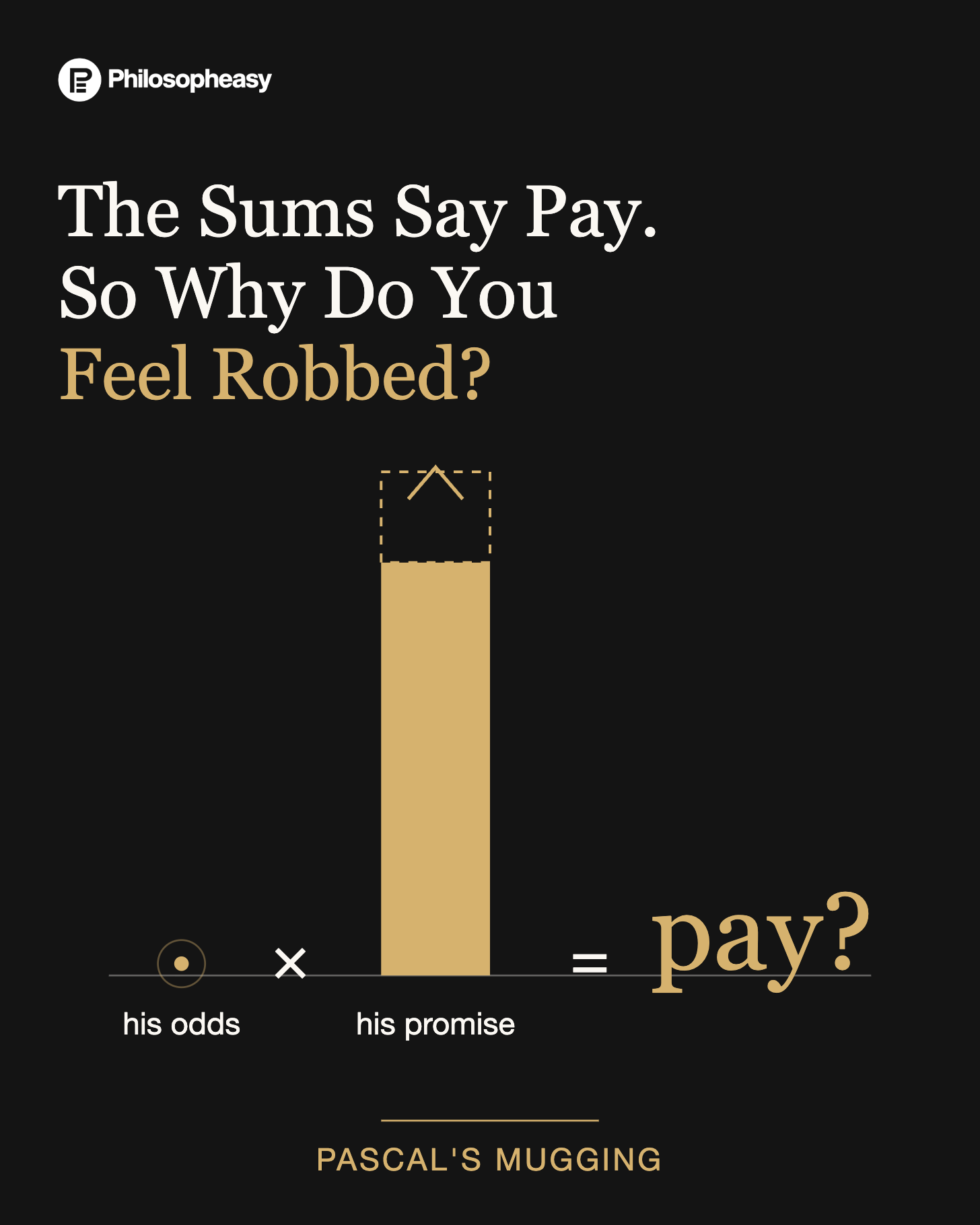
A small enough chance of a big enough disaster can justify almost any demand, provided nobody checks who chose the numbers. That’s the claim. It’s wrong, and the way it’s wrong is worth seeing.
Take the leaving-gift card going round the office. Sign it, chip in, chase the one colleague who hasn’t. Skip the card and, sure, someone might feel overlooked. Probably not. But the what-if took me two seconds to think up and costs me nothing.
Pascal saw the same machinery in kings. In the Pensées he describes a court as a device for keeping the king occupied, because left alone he would have to think about his own condition. The courtiers weren’t running the king’s day. They were keeping him out of an empty room.
The mugging is older than its name, and the history is short.
Wednesday’s toolkit has a 10-minute empty-room exercise you can try that same evening: [read Wednesday’s toolkit](#).


