


You just watched a tragedy, a meme, and a birth announcement in forty seconds. The most terrifying part is that your heart rate didn’t change once.
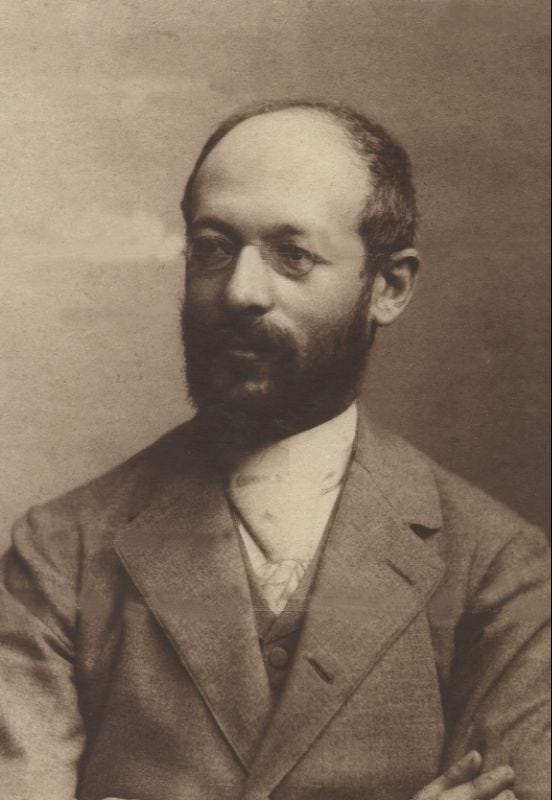
In 1903, Georg Simmel stood on the streets of a rapidly industrializing Berlin and watched people walk past horrors and miracles without blinking. He didn’t see a moral failing in their coldness; he saw a biological necessity. Simmel realized that when the human nervous system is bombarded by a relentless, chaotic stream of shifting stimuli, it cannot process every input at full emotional volume without short-circuiting. So, it does something brilliant and devastating: it flattens everything.
He wasn’t writing about the tragedy of the modern city. He was writing about the exact sensation you feel when you close your laptop at 5 PM—a profound, hollowed-out detachment masquerading as calm.
Simmel understood that apathy isn’t the absence of feeling. It is the armor you wear when you are being asked to feel too much.
The Architecture of Indifference
Simmel called this the “blasé attitude.”
It is a psychological self-preservation tactic where the brain, exhausted by the sheer volume of competing demands, actively devalues the meaning of everything it encounters. In the blasé state, nothing is urgent, nothing is tragic, and nothing is beautiful. Everything is reduced to a flat, gray baseline. Everything is just data.
To understand how this operates in your own life, look at the specific texture of your exhaustion. Think about the last time you spent forty-five minutes scrolling through a social media feed on a Tuesday night. You swiped past a GoFundMe for a dying dog, a meticulously choreographed dance routine, a political crisis in a country you cannot point to on a map, an advertisement for seamless underwear, and a friend’s engagement photos.
To actually metabolize the emotional weight of those five things in sequence—to feel genuine grief, followed by aesthetic appreciation, followed by existential terror, followed by consumer desire, followed by vicarious joy—would require the psychological bandwidth of a saint. Your nervous system simply cannot pivot that quickly.
So, your brain applies the blasé attitude. It forcibly reduces the dying dog and the seamless underwear to the exact same level of significance. It makes them both worth nothing.
You might call this brain fog, or burnout, or a symptom of the modern attention economy. Simmel would call it a highly successful adaptation. You have successfully trained your nervous system to become indifferent to the world because the world has become too loud to endure.
But here is the problem with this defense mechanism: it bleeds.
The blasé attitude does not stay neatly confined to your phone screen or your email inbox. It seeps into the way you listen to your partner talk about their day across the kitchen island. It infects the way you stare at a sunset on a Sunday afternoon and feel absolutely nothing, wondering in a quiet panic if you are broken.
You aren’t broken. You are just wearing armor that has grown so thick you can no longer feel the weather.

The Cost of the Armor
The danger of the blasé attitude isn’t that it makes you cold to strangers on the internet. The danger is that it fundamentally alters your capacity to assign value to your own life.
When your primary mechanism for surviving the modern world is to flatten all incoming stimuli into a tolerable mush, you lose the ability to experience peaks. You trade joy for the guarantee that you will not be overwhelmed.
You are walking through your life with the emotional volume deliberately turned down to a two, terrified that if you turn it up to a ten, the noise will shatter you. And you are probably right. We have built a psychological environment that punishes sensitivity and rewards a glassy-eyed, frictionless glide through the demands of the day. To care deeply about things right now feels like a tactical error.
So you maintain the fog. You keep the detachment.
But the terrifying question isn’t whether you are numb. The terrifying question is what would happen to your carefully constructed, perfectly managed life if you suddenly allowed yourself to thaw out. If you actually let the world touch you again—if you felt the full weight of your time slipping away, the full tragedy of the evening news, the full beauty of a quiet morning—you might not be able to sit through your 10:00 AM marketing meeting. You might have to change everything.
This article is very well written and true. Apathy is not our normal default mode. It's learned as a defense mechanism against a world that is trying to destroy us while our brains are fully charged with the tasks of physical, mental, emotional, social, and spiritual self-preservation.
Balance and intention to connect with people living in one’s community, alongside friends at a distance on screens, is essential.