


There is a moment on Thursday afternoon when you open a new tab simply to avoid the two-second delay of the previous one. Your body is still. Your nervous system is sprinting. You leave work and the noise follows. The podcast in the car, the group chat lighting up at dinner, the compulsive reach for the phone before the movie has even started. You consume more data in a single afternoon than your grandparents processed in a month, and the primary symptom is not enlightenment. It is anesthesia. The world is too loud, so you turn down the volume on your own capacity to feel it.
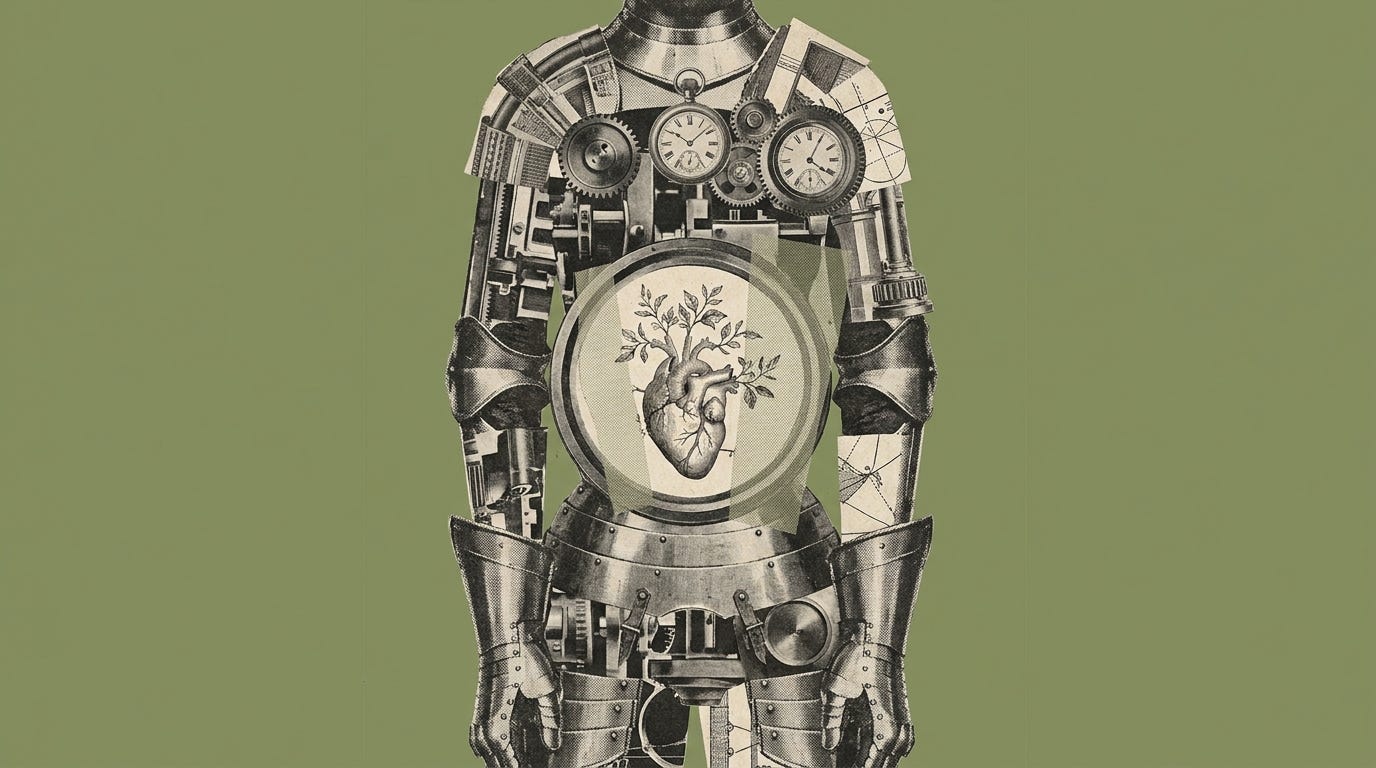
This entire week circled a single tension: the friction between the speed of the world and the speed of human processing. We are drowning in input, and our defense mechanism is to stop caring. The numbness is not a failure of character. It is an adaptation. You survive an environment designed to accelerate every interaction by blunting the edges. You scroll past tragedies and sales pitches with the exact same blank expression. But when you build a wall to keep out the noise, you also block out the signal. If numbness is the only way to endure the pace of modern life, what happens to the parts of you that require stillness to survive?
We started Monday by naming the numbness. But the numbness is only a symptom of a much larger architecture. Wednesday’s deep dive makes the case that the real engine driving this exhaustion isn’t the technology itself—it’s something older and stranger about velocity. Once you see how this invisible force reorganises your day, you understand exactly why you are addicted to the ‘now’, and why trying to slow down feels like standing in front of traffic.
Friday’s episode takes the problem out of the abstract and puts it back in your hands. It starts from a claim that sounds entirely backwards until it suddenly clicks: that attention, not effort, is the rarest form of generosity we have left. The episode asks what it actually costs to give someone your unbroken focus in a system that monetises your distraction.
Here is the reality of living in a state of perpetual acceleration. When you are moving fast, everything is a blur, and a blur requires no emotional investment. Speed is the ultimate anaesthetic. If you stop moving, you have to look at the room you are standing in. You have to look at the life you have actually built, rather than the one you are rushing toward. This is why the silence is so terrifying when the power goes out or the phone dies. The defense mechanism drops. The numbness wears off.
The friction you feel when you try to sit still is not a lack of discipline. It is the withdrawal symptom of a mind taught to fear the present tense. To reclaim your capacity to feel, you have to risk the overwhelming weight of the world as it actually is. The question is not how to manage your time better. The question is what you expect to find waiting for you the moment you finally stop running.

Well, I often stop to meticulously observe the place where I am "being" at that moment. It's a very interesting and, for me, satisfying exercise. The recurring issue is that many times I don't know where I want to go next, what else I want in life. It's not a pleasant feeling; it feels as if something is missing. At other times (and it's not like I'm a wealthy person) I feel like I don't want anything because I already have everything.