


You wrote the email in under a minute. Then you spent twenty-three minutes running it past a group chat, a colleague on Slack, and a chatbot that told you it looked great and offered to make it warmer.
The email did not improve. Something else happened instead.
The Priest Who Told the Volunteers to Go Home
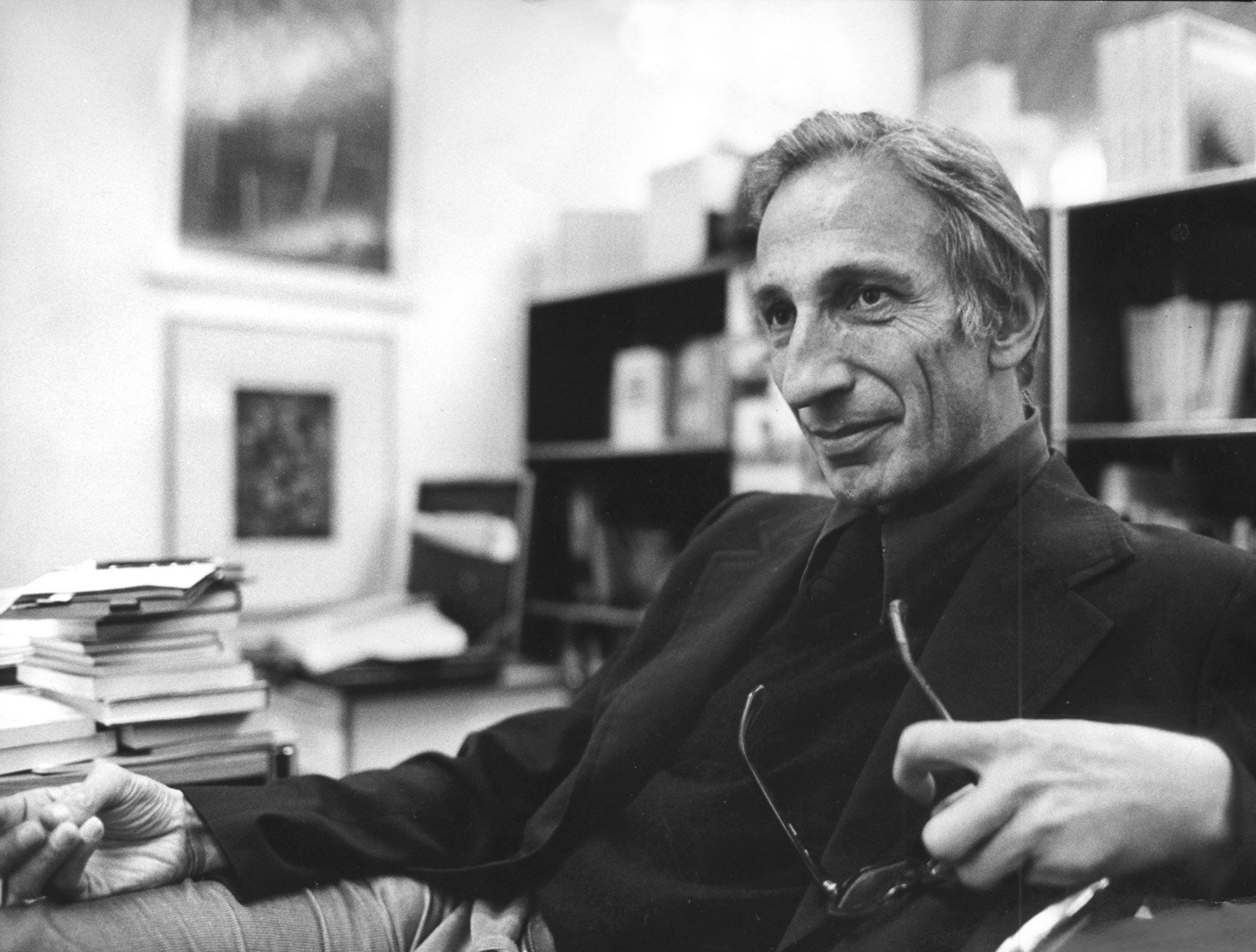
Ivan Illich ran a centre in Cuernavaca, Mexico, in the 1960s, training North American missionaries and volunteers to work in Latin America. He eventually stood in front of a room of them and told them to stay home. Not because they were cruel. Because they were effective.
He had been watching what arrived alongside the good intentions. A village gets a clinic, and within a decade the grandmother who knew what to do about a fever is a quaint anecdote. A village gets a school, and learning becomes something that happens in a building, on a schedule, to people who are certified to receive it. A village gets a road, and the eleven kilometres people used to walk becomes a distance you need a vehicle to cross.
Nothing was taken by force. Every single exchange was voluntary, and every single one looked like progress.
Illich later ran the numbers on the American driver: roughly 1,600 hours a year given over to the car — earning for it, sitting in it, servicing it, insuring it — to travel about 7,500 miles. Under five miles an hour.
Walking speed. At enormous cost.
Radical Monopoly
The term he gave this is radical monopoly, and it is not what it sounds like.
An ordinary monopoly is one company owning a market. A radical monopoly is one kind of solution owning a need — so completely that the alternatives stop being options and start being eccentricities. Cars did not out-compete walking. They rebuilt the world so that walking became impractical, then unsafe, then odd. Medicine did not simply cure more people. It made your own body a foreign country requiring a licensed translator.
The tool does not defeat the capacity. It makes the capacity socially unusable, and then the capacity quietly rots.
Here is the part nobody told you it applies to.
You are standing in a supermarket holding two brands of olive oil. Neither of them matters. You have eaten olive oil for thirty years and you have preferences, actual sensory preferences, formed in your actual mouth. You take out your phone anyway. Four minutes later you are reading a stranger’s opinion about polyphenol content, and you buy the one with more reviews.
Or the message from your sister that reads slightly cold. You know exactly how she meant it — you have forty years of data on how she means things. You screenshot it and send it to two people who have never met her.
Or the job offer. The flat. The half-second before you press send on something entirely reversible, where you feel the answer arrive — clean, immediate, yours — and then you go and get it countersigned.
The judgment is still there. What has atrophied is the willingness to act on it unaccompanied.
That is the radical monopoly, running exactly as Illich described it. Consultation became so cheap, so instant, so infinitely available, that deciding alone stopped being one option among several and became the irresponsible one.
The Word for Someone Who Does It Themselves
There is a tell, and Illich named it precisely. In a radical monopoly, doing the thing yourself does not feel difficult. It feels unprofessional.
You can still walk to the shop. It just feels faintly ridiculous when the car is right there. You can still decide whether the email is fine. It just feels reckless, borderline arrogant, to send it without a second signature — when checking is free and takes eleven seconds and everyone else is checking.
Notice what that means about the word amateur. It comes from the Latin for lover: someone who does a thing because they love it, not because they are certified to. Somewhere in the last century it became an insult. Illich thought that inversion was the whole story of the modern world in one word.
What you have outsourced is not the answer. Most of the time the tools give you the answer you already had, in a nicer voice. What you have outsourced is the willingness to be wrong on your own authority — and that willingness was never a personality trait. It was a muscle, and it was load-bearing, and it responds to disuse the way every other muscle does.
There is a version of you that goes to the tools because the question is genuinely hard. And there is a version that goes because the silence between having a thought and acting on it has become physically uncomfortable to sit inside.
You already know which one made the last three checks.
The disturbing question isn’t whether you can still decide. It’s what happens the first time you try, and can’t tell the difference between not knowing the answer and not recognising your own voice giving it.
The mechanism behind this — the part that actually changes how you make decisions — is what we go into on Wednesday. It’s paid. It’s 30 minutes. It’s the reason most people subscribe.
The most profound realizations are those which are right in front of us all the time. Cant open a jar without a Bonzo can opener. Can’t go camping without a three burner propane stove, can’t parallel park or back up without a built in camera and computer software. The gradual erosion of skills and confidence on our way to servitude. Does this cause us to look at DIY differently?
It's really hard to take this seriously, when the writing reeks of llm-isms. I don't mind llm writing - just the style and content are at loggerheads.