


He sits in the dim light of his studio, dust motes dancing in the single shaft of sun cutting through the grime-streaked window. Days blur into weeks, marked only by the shifting light and the slow, agonizing progress on the canvas before him. The phone remains unanswered, the dishes pile up in the sink, and the outside world, with its laughter and its demands, recedes into an indistinct hum. He is painting, you see.
He is creating. But at what cost? Is he living, or merely existing for the sake of his art? This isn’t just a romanticized notion of the tortured genius; it’s a stark, often brutal reality that every serious creator must confront. It is the artist’s bargain, a silent pact that demands an impossible choice.
The Allure of the Inner World
From the moment the spark ignites, the creative urge casts a powerful spell. It promises meaning, purpose, and a chance at immortality. For many, it begins as a passionate hobby, a delightful escape from the mundane. The world of imagination offers boundless freedom, a place where rules bend and possibilities are infinite. Who wouldn’t be drawn to such a sanctuary?
But the sanctuary slowly transforms into a fortress. The initial joy of creation deepens into an obsession. The external world, once a source of inspiration, begins to feel like a distraction. Conversations feel superficial, responsibilities burdensome, and time spent away from the “work” feels like a betrayal of a higher calling. The artist starts to disappear into their process, their identity inextricably linked to the act of making.
Otto Rank’s Stark Warning: A Destructive Urge
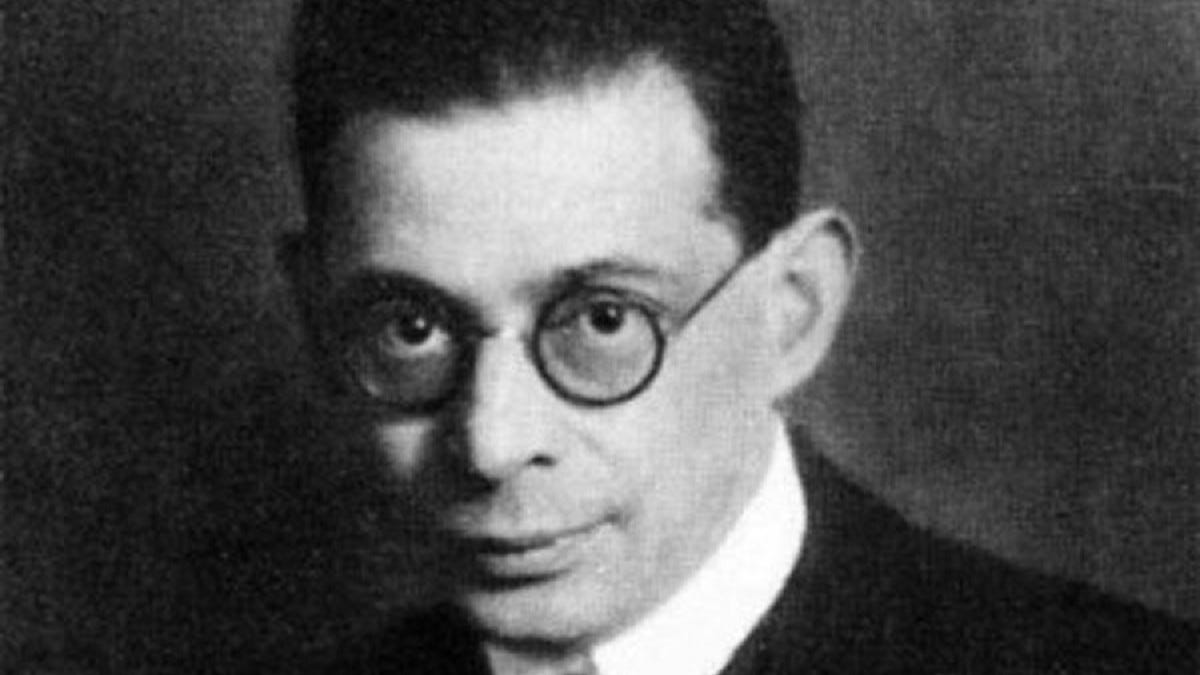
The psychoanalyst Otto Rank, a figure often overlooked in contemporary discourse, offered a chilling perspective on this very phenomenon. He warned that the creative urge is not merely a benign pursuit; it is, in its profoundest sense, a destructive force. Rank posited that the artist, driven by an inherent need to transcend mortality and leave a lasting mark, must necessarily “borrow life from himself.”
What does it mean to borrow life from yourself? It means diverting vital energy, attention, and time that would otherwise be spent on personal relationships, self-care, social engagement, or even basic worldly comforts, directly into the furnace of creation. The result? The creator is often left depleted, emotionally and physically drained, and frequently unable to live what most would consider a “normal” or well-adjusted life. The masterpiece might be finished, but the person behind it is often a shadow of their former self, the well of their personal existence seemingly dry.
Every artist dips his brush in his own soul, and paints his own nature into his pictures.
— Henry Ward Beecher
The Two Paths: Engagement or Withdrawal
This inherent conflict forces a bifurcation of existence. You can choose to fully engage with life, to cultivate rich relationships, pursue varied interests, build a conventional career, and immerse yourself in the day-to-day tapestry of human experience. This path offers breadth, stability, and the comfort of shared humanity.
Or, you can choose the path of profound artistic withdrawal. This often means sacrificing personal comfort, financial security, and even emotional intimacy for the singular pursuit of your craft. For those who choose this path, the sacrifices are not incidental; they are fundamental. They are the price paid at the door of inspiration.
Consider the typical casualties:
Social Life: Friendships wither due to constant absence or preoccupation.
Personal Relationships: Partners and family often feel neglected, struggling to compete with the artist’s primary devotion.
Financial Stability: A consistent income becomes secondary to creative freedom, leading to chronic struggle.
Mental Well-being: The intense focus, self-criticism, and isolation can lead to anxiety, depression, or profound loneliness.
The Famine and the Feast: Fueling the Flame
Ironically, life experiences are often the very fuel for art. The joy, the pain, the triumph, the mundane – these are the raw materials. Yet, to truly metabolize these experiences into art, the artist must often distance themselves from the living of them, viewing them through a lens of detachment. They become observers of their own lives, rather than full participants.
This creates a paradoxical cycle: the artist needs life to create, but creation consumes life. Is it a feast that ultimately leads to famine? Or does the act of transformation itself constitute a different, perhaps higher, form of living? The question lingers, unanswered for many who walk this solitary path.
Art washes away from the soul the dust of everyday life.
— Pablo Picasso
The most profound creations often emerge from the very parts of life an artist chooses not to live, a haunting masterpiece forged from sacrifice.
Unlock deeper insights with a 10% discount on the annual plan.
Support thoughtful analysis and join a growing community of readers committed to understanding the world through philosophy and reason.
The Echo of the Unlived Life
So, must you choose? For the truly dedicated artist, it often feels as if there is no choice at all. The creative impulse is not a hobby but a fundamental drive, a demanding master. The bargain is struck, often unconsciously, long before the terms are fully understood. The artist trades the broad, varied tapestry of a conventionally lived life for the intense, singular focus of creation.
There is no judgment here, only an acknowledgment of a profound truth. The works of art that move us most deeply often carry within them the echo of an unlived life, a testament to the sacrifice made by their creator. It is a lonely path, but one that has given humanity its most enduring expressions of beauty, truth, and meaning. What remains, then, is not a simple choice, but a lifelong dance on the precipice between existence and creation, forever seeking balance in an inherently unbalanced world.
This is a REALLY interesting essay. I have been a musician obsessed with music for most of my life and I identify with ALL it is said about such a life in the first paragraph, before Rank's views: poverty, giving up relationships, etc etc.
However, in my view, Otto Rank could not have been MORE mistaken. I have not only my own life to draw conclusions from, but the lives of many others of the greatest musicians, artists, and even philosophers, more about that later.
Personally, I can say this: music, my obsession, has been my life's blessing, not a curse at all as Rank seem to suggest. I could not be more proud about anything more, about myself. I am not a genius, just a good musician. Yet even so, I am one of the best in my genres and styles. Being a genius is not required. And many of the greatest musicians were late developers, too.
For one thing, an artist is NEVER bored, and if boredom sets in, it is because of the OUTER world, not the inner one. Just as this excellent essay indicates, even though I do not agree with the conclusions, some basic excellent truths are described, especially in the first part through the author's own beautiful description, days blurring into weeks (and years...) the specks of dust, solitude.
But it's not a fortress, to the contrary, it's a sanctuary. We regard the things given up as indicated, as mediocre, and common with mediocre people, which is the majority. This is not said because we think we are great, but simply because where most people think many of the things they like, interesting, we think of them as dull, colourless, flat, and even annoying.
It is not just I saying this: I have read many autobiographies and biographies of great musicians and remarkable people, and we all have this in common: we could be happiest only by doing what we love, and what we are best at. Our muse has never been a fortress, but a loving sanctuary, who always gave us an exciting and worthwhile path to be on. Even someone like Bruce Lee, if one looks into it, has demonstrated that a beautiful obsession is not what chained him, but liberated him. I mean, one can say anything about someone like Lee, except that he was mediocre.
Reading the autobiography of great musicians, such as those by Anton Rubinstein or Louis Spohr or Hector Berlioz, or even contemporary pop and rock musicians such as Marty Friedman, Joe Satriani, Yngwie Malmsteen (I myself am a pop and rock musician, not classical, however I love all good and great music so have always been interested in the classical music world too, because I am interested in all musical worlds, just like a chef who wants to know how every food tastes), or even non musicians such as Bruce Lee, or even philosophers like Arthur Schopenhauer, one sees one thing common to all of them: they all absolutely loved to create whatever they created, and they never complained about it, quite the contrary, it made them truly happy.
And that is the point, most people are mediocre. They live and die doing the same old things that most people do It's not their fault, which is the next point: art, of any kind, is never a choice. I have no idea why I wanted to be a musician at all costs, even when I could see that financially was not good, etc etc.
But I never cared. I preferred to do away with other things that people in general can't do away with. But I assure you, mine has NEVER been an unhappy choice!
Neither did Bruce Lee or Rubinstein or Friedman etc had any idea WHY they had this burning desire, this irresistible urge to enter this wonderful and strange dimension without ever looking back. This is not a choice. It is absolutely true: you either have it, or not.
'Normal' people think that for us it's 'work', or 'personal sacrifice'. But they could not be more mistaken. To us it's ecstasy and we feel it as a blessing.
Sure, we have to do away with a few things, even people. Even Arthur Schopenhauer, who understood art very well because he himself was a philosopher-artist, wrote :' For the likes of us, other people and mundane things are not just unnecessary, they are a downright obstacle to our creative inclinations'.
And so, poor Otto Rank could have not been more mistaken! To the contrary, it is people like us who feel pity for those around us who seemingly live a 'normal' life: getting married, having children, slaving away at work and keeping up with the Joneses. We did not make these mistakes. Sure, we do NOT live a normal life: but it is us who rejected it, not the other way around.
To us, this 'normal' life simply wasn't enough, it was too boring and mediocre. The song by Queen says it best: 'I want it all, and I want it NOW'.
What do we want? We have no idea, but we have this urge to CREATE something BEAUTIFUL, so I guess that is what we want.
Even the philosopher Bertrand Russell said: 'Ever since I was young, I wanted to do something GREAT.'. By creating, of course.
Neither is true that our lives are 'unlived'. I haven't lived many love stories, say, but I learned a lot about love. Dare I say, I know more about it than most people who have gone from an infatuation to another.
''The richer is one's inner world, the less he'll need the outer one. Conversely, the poorer is the inner one, the more he'll need the outer one. Most people resemble those dogs which start barking as soon as they hear something move.'. - Arthur Schopenhauer
Thanks for the interesting and excellent essay! I also read them simply because I love the excellent writing! Sorry for my confused thoughts, I just write whatever comes to mind. Thank you!
I sometimes think that writing is my way of escaping the mundane world, of confiding in my journals and creating an inner world to explore. There was a point where I was in the obsessive mindset of writing every single second, every single day. I would get irritated when I’m “pulled” out of my inner world and I’d be indifferent to everyone and everything around me. I appreciate the truth and I’ll share this with some friends.