
We see the hard edges of the world. A cathedral spire reaches for the sky in a gesture entirely different from the earth-bound submission of a mosque. The sound of a shofar’s cry is not the resonant hum of a Tibetan singing bowl. The rituals, the laws, the languages—they are profoundly, beautifully, and often violently different.
From our vantage point on the ground, these differences seem irreconcilable. We inhabit these traditions like citizens of rival nations, defending the integrity of our own map and noting the fundamental errors in the one next door.
But what if this conflict is an illusion of perspective? What if the great spiritual traditions are not competing circles drawn on a flat piece of paper, but different shadows cast by a single, unseen sphere? What if the path to unity isn’t found by erasing the sacred borders, but by discovering a dimension that transcends them all?
The Container and the Content
The differences between religions are real. They are not trivial. Frithjof Schuon, a pivotal 20th-century metaphysician, honors these unique forms. He calls this dimension the “exoteric”—the outer body of a religion. It is the set of divine laws, historical revelations, and communal rites that give a tradition its necessary shape and discipline. It is the sacred vessel.
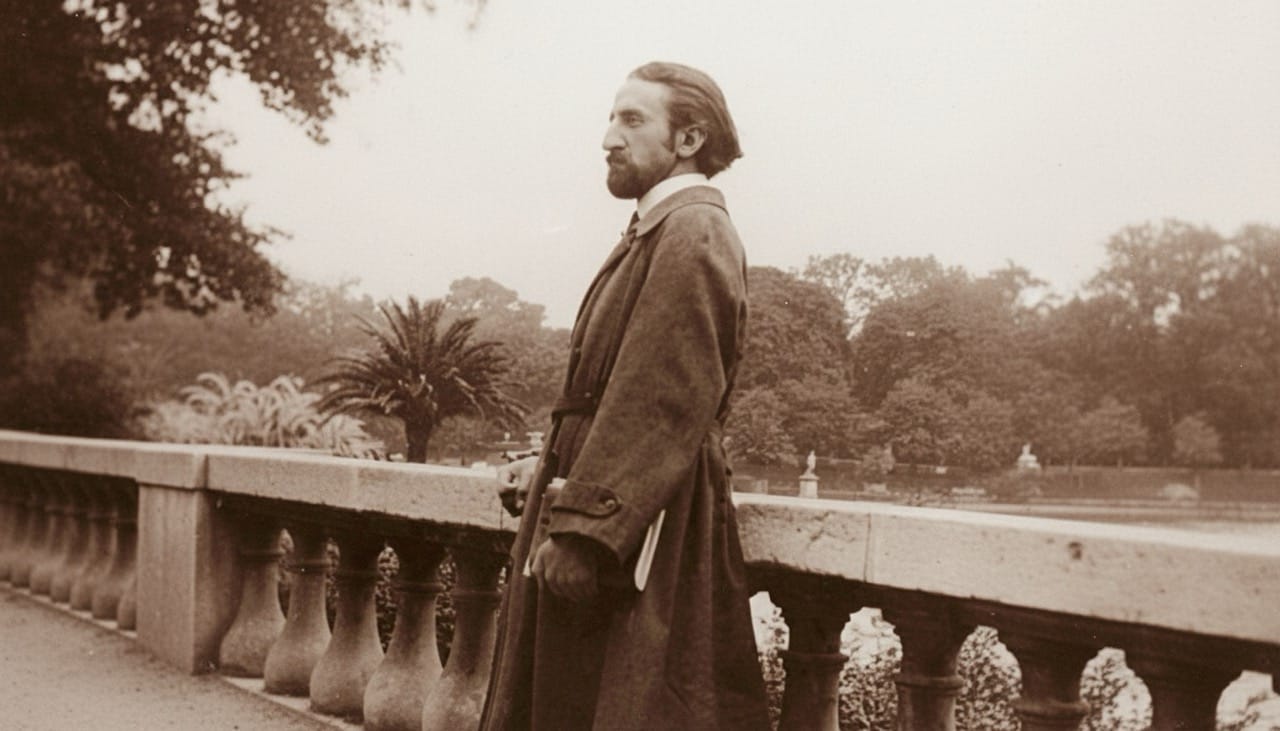
But if we only ever study the vessels, we will spend our lives cataloging their differences in material and color, and we will miss the one thing they were all built to hold. Within each of these orthodox forms, Schuon argues, lies an “esoteric” dimension. This is the inner, metaphysical core. It is not a different religion, but the animating spirit of the one you are in. If the exoteric is the law, the esoteric is the direct, heart-stopping realization of the Truth from which that law originally springs.
The spiritual path is not to smash the sacred vessel in search of what it contains, nor to worship the vessel and forget its purpose, but to learn to see through its beautiful form to the light it houses. This distinction resolves a paradox: it allows one to be uncompromisingly faithful to their own path while recognizing that another’s path is a parallel route to the same peak.
The Journey Inward
So, if this unity exists, where is it found? Is it a vague feeling of universal brotherhood? A sentimental blend of spiritualities, picking and choosing convenient parts from a global buffet?
Absolutely not. For Schuon, that kind of sentimental syncretism is a profound misunderstanding. The unity is not found by standing outside all traditions, but by digging so deeply into your own that you strike the universal aquifer that feeds them all. The Sufi’s path to Divine Unity, the Vedanta’s realization that “Atman is Brahman”, the Christian mystic’s search for the “spark of the soul”—these are not different truths. They are different vocabularies describing the same annihilating encounter with the Real.
To say that every orthodox tradition is a valid path to God is a statement of tremendous metaphysical gravity. To say that any path one invents for oneself is equally valid is to say nothing at all.
— Frithjof Schuon
This path requires more than tolerance. It demands a new kind of sight. It asks you to stop defending the perimeter of your circle and begin the real work: the journey from the circumference back to the silent, universal center from which it was drawn. But how is that journey undertaken? And what are the dangers that await?
We’ve only touched the edge of the map. Understanding the full metaphysical architecture—and how to apply it without falling into intellectual pride or sentimental relativism—is the work of a lifetime. The complete blueprint is waiting.