


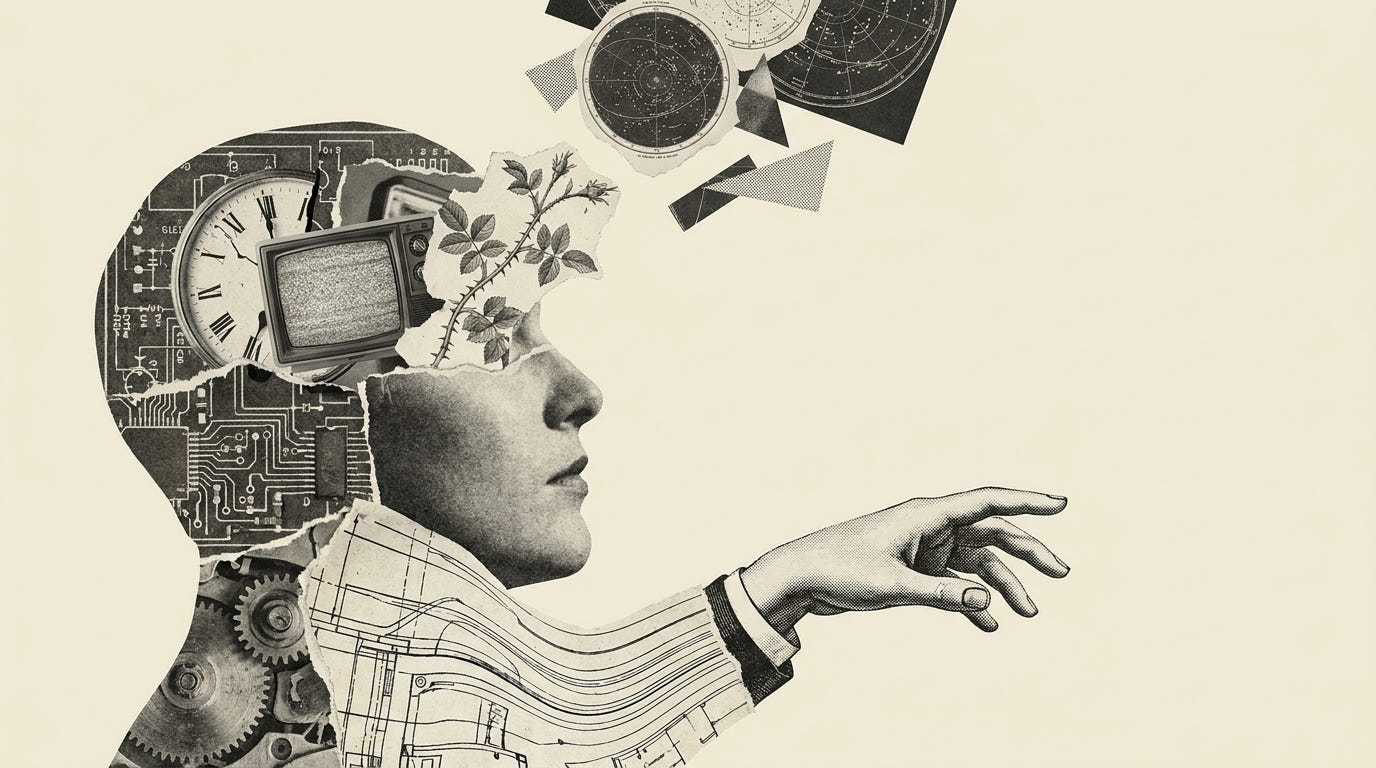
You scroll past a photograph of a political protest. The lighting is slightly too dramatic. The hands of the subjects have an unnatural number of fingers. The background text is a meaningless blur of alien symbols. You pause, squint, and wonder: Is this real?
A decade ago, a photograph was the ultimate proof of an event. Today, it is merely a suggestion. We are living through a phenomenon we might call reality collapse. Between AI-generated media, algorithmic echo chambers, synthetic voice clones, and bots conversing with other bots, the boundary separating the authentic from the artificial has not just blurred—it has dissolved.
The standard explanation for this disorientation is purely technological: artificial intelligence simply got too good, too fast. We assume that if we just build better deepfake detectors or pass stricter labeling laws, reality will reassert itself.
But this ordinary explanation misses the deeper crisis entirely. The problem is not just that machines have learned to manufacture reality. It is that our minds have been quietly rewired to accept it.
We do not have a deepfake problem. We have a consensus problem. When reality becomes entirely mediated, truth is no longer what actually happened—it is whatever the algorithm makes us feel.
To understand why we are so vulnerable to the Great Blurring, we have to stop looking at the technology itself and examine the invisible environment it has created. We have to understand how the medium changes the mind.
The Rewiring of Human Consciousness
Long before the internet, a philosopher and cultural historian named Walter J. Ong studied how human beings process reality. Ong was not a computer scientist; he was a scholar of human communication. In his landmark 1982 book, Orality and Literacy, he proposed a radical framework: the primary medium a society uses to communicate doesn’t just transmit information. It fundamentally restructures human consciousness.
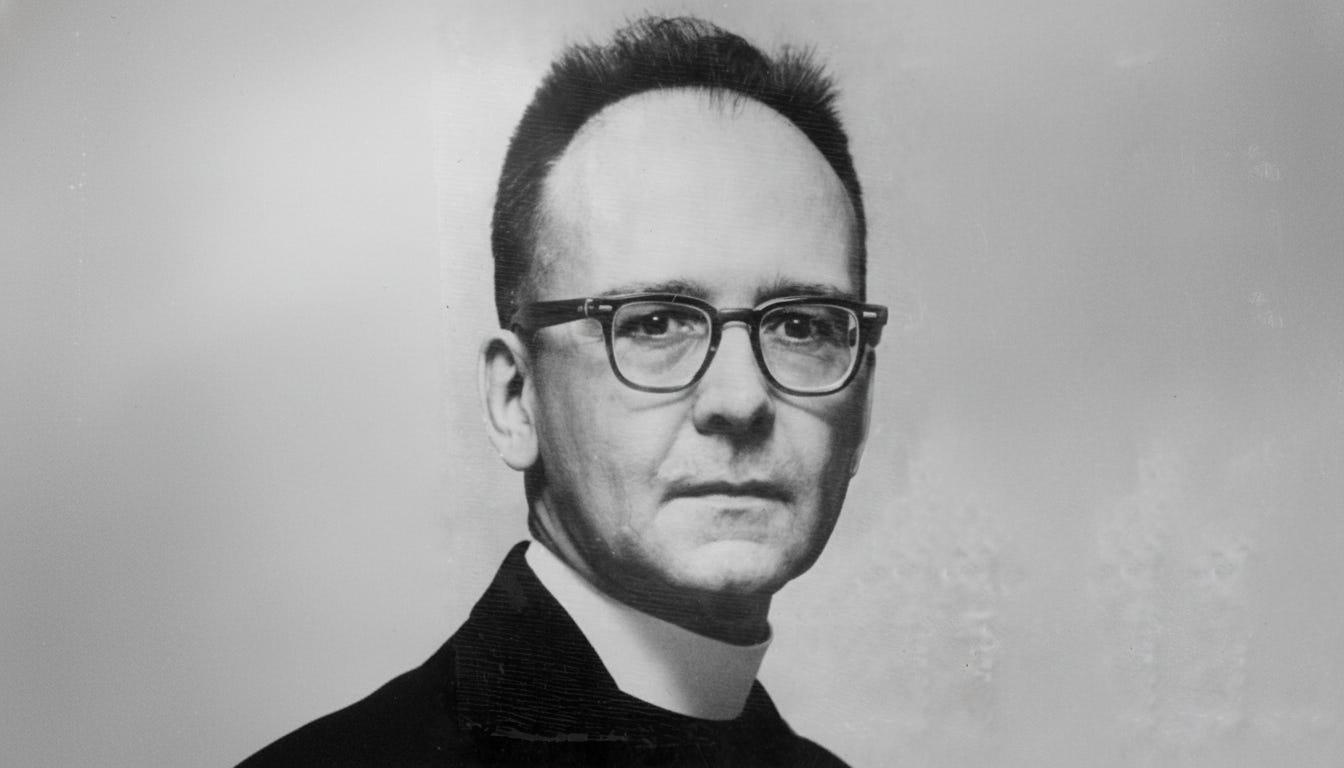
Ong divided human history into distinct psychological eras based on how we share knowledge.
In primary oral cultures—societies without writing—knowledge was entirely communal. Truth was whatever survived in the collective memory, passed down through stories, proverbs, and emotional resonance. You could not separate the speaker from the speech. Truth was a shared, immersive experience.
Then came the printing press, which birthed the literate era. Print changed everything. It took words out of the communal air and locked them onto a silent, physical page. According to Ong, print created a new kind of human mind: one capable of linear, objective, and analytical thought. Because you could read a book alone in a quiet room, you could separate the “knower” from the “known.” Print created the very concept of objective truth—facts that exist independently of human emotion.
But Ong saw a third era emerging with the rise of electronic media. He called it “secondary orality.”
Secondary orality is a culture that relies on modern technology—telephones, television, and now the internet—but functions psychologically like an ancient tribal village. In a state of secondary orality, we return to the group-mind. Communication is once again instantaneous, emotional, and highly communal.
This is the interpretive key to our modern disorientation: we are trying to navigate a secondary oral world using the outdated rulebook of a literate world. We expect the internet to behave like a vast, objective library. But the internet is not a library. It is a global tribal campfire, running on algorithms that reward emotional resonance over verifiable fact.
The Algorithmic Campfire
When you understand Ong’s concept of secondary orality, the Great Blurring suddenly makes sense.
The internet began as a literate medium. Early web pages were essentially digital books—static text that you read analytically. But as the web evolved into algorithmic social media, it abandoned the logic of print and embraced the logic of the tribe.
Today’s digital culture is hyper-oral. It is driven by virality, applause metrics, tribal signaling, and immediate reaction. An algorithm does not care if a piece of information is objectively true; it only cares if it creates engagement. It measures the heat of the campfire, not the accuracy of the story being told around it.
Artificial intelligence did not destroy objective truth. It merely arrived at the exact moment we had already decided we preferred emotional resonance over verifiable fact.
Enter generative AI. Artificial intelligence is the ultimate engine for secondary orality. It can generate infinite “vibes” without any anchor in physical reality. AI does not need to construct a logically sound argument or capture a real historical moment; it only needs to create a resonant artifact that the tribe will share.
This is why reality collapse feels so overwhelming. The synthetic content generated by AI perfectly exploits the vulnerabilities of our secondary oral state. We are no longer evaluating media analytically; we are evaluating it based on whether it aligns with our communal emotions. If an AI-generated image feels true to our political biases or our cultural anxieties, our rewired brains accept it as real.
The Illusion of the Pentagon Explosion
We can see this dynamic perfectly illustrated in a brief, chaotic event from May 2023.
On a random weekday morning, an image began circulating on social media showing a massive plume of black smoke rising from a building near the U.S. Pentagon. The image was shared by multiple verified accounts, including a few claiming to be credible news organizations. Within minutes, the image went viral. Panic rippled through the network, and the U.S. stock market briefly dipped, wiping out billions of dollars in value for a fleeting moment.
The image was entirely fake. It was generated by artificial intelligence.
When fact-checkers finally caught up, they pointed out the obvious flaws. The building didn’t actually look like the Pentagon. The fence lines dissolved into meaningless pixels. The lighting was physically impossible. From a literate, analytical perspective, the image was an obvious forgery.
But in the heat of the moment, nobody was using their literate mind. The image bypassed analytical thinking entirely and plugged directly into communal panic. It moved at the speed of secondary orality. It didn’t matter that the image couldn’t withstand thirty seconds of objective scrutiny. It only mattered that it successfully triggered the emotional contagion of the network.
This is the Great Blurring in action. The danger of AI is not that it creates perfect replicas of reality. The danger is that we no longer require perfect replicas to believe them. We have been conditioned by algorithmic culture to accept synthetic reality, so long as it moves fast and makes us feel something.

Or save 25% and get 3 months free
Reclaiming the Real
So how do we survive the Great Blurring?
If the problem is not merely technological, the solution cannot be merely technological. We cannot rely on Silicon Valley to invent a software patch for reality. Slapping a “Generated by AI” watermark on a video will not stop a tribal mind from sharing it.
We have to recognize how our cognitive environment is shaping us. We must acknowledge that living constantly within the algorithmic feed traps us in a state of secondary orality, where everything is subjective, emotional, and easily manipulated.
You cannot fact-check your way out of reality collapse. The defense against a synthetic world is not better software, but a deliberate return to unmediated human friction.
To anchor ourselves, we must actively cultivate the “primary reality” that algorithms cannot touch. We must engage with things that cannot be scaled, automated, or optimized. Reading physical books, engaging in long-form, face-to-face conversations, building tangible skills, and spending time in unmediated physical spaces—these are no longer just quaint hobbies. They are acts of cognitive rebellion.
The boundary between the authentic and the artificial will only continue to dissolve on our screens. But reality has not actually collapsed. It is still right there, waiting for us, the moment we look up.
The Monday article clarifies the visible problem—how our media environment has rewired our consciousness to accept synthetic reality. But understanding the symptom is only the first step. To navigate this new landscape, we must examine the deeper psychological structures that make us so vulnerable to the artificial in the first place.
The “modern tribal oral tradition” framing is extremely useful. One thing I’d add is that the issue may not be mediated versus unmediated reality, because all human experience is mediated in some way — by language, manners, memory, print, institutions, algorithms, and now AI. The more useful distinction may be between mediations that collapse discernment and mediations that strengthen it. Algorithmic social media often rewards emotional contagion; long-form books, face-to-face conversation, physical practice, and sustained reflective dialogue can create friction, patience, and correction. So perhaps the task is not to escape mediation, but to cultivate forms of mediation that make us more responsive to reality rather than more manipulable by resonance.
I like this article; it employs sophisticated analysis basically to argue that you should get off your asses and go outside...