


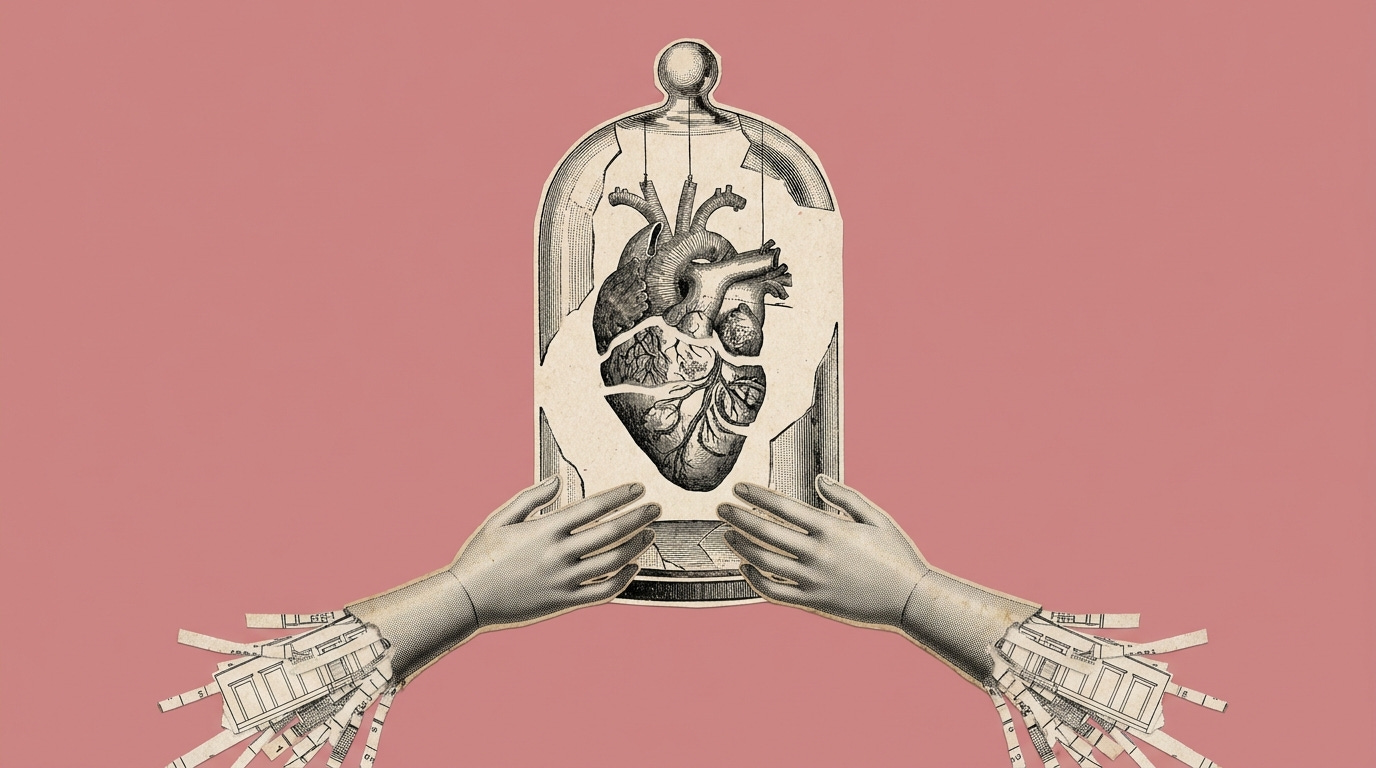
We live in the era of the “aesthetic.” Scroll through any digital feed, and you will not find people simply living; you will find them performing highly specific, hyper-curated visual identities. There is “cottagecore,” with its pastoral escapism. There is “dark academia,” with its tweed and manicured melancholy. There are endless “eras” and “vibes” tailored to every conceivable mood, seamlessly swapped out when the season changes or the algorithm shifts.
On the surface, this looks like a triumph of self-expression. We have never had more tools to broadcast who we are. But look one layer deeper, and a different reality emerges.
The modern obsession with aesthetics is not a new form of authentic self-discovery. It is a defense mechanism. We are retreating into “vibes” because the actual, un-curated reality of modern life feels impossibly unmoored.
We do not adopt internet aesthetics to express who we are; we adopt them to hide from the terrifying freedom of having to figure it out.
We are no longer cultivating deep, enduring personalities. Instead, we are using aesthetics to shield ourselves from the anxiety of stepping into the world as unpolished, unfinished human beings.
Tourists in a Liquid World
To understand why we have traded authentic living for curated moods, we have to look at the structural ground beneath our feet. The sociologist and philosopher Zygmunt Bauman provided the definitive framework for this shift with his concept of “liquid modernity.”
For most of human history, society was “solid.” Your identity was largely predetermined by your geography, your family, your profession, and your local community. These structures were rigid and often oppressive, but they were undeniably stable. You knew exactly where you stood, and your identity was a lifelong project built within those solid walls.
Today, we live in a liquid world. Everything that was once solid—careers, relationships, community ties, even geographic locations—has melted. We are expected to be infinitely adaptable, ready to pivot at a moment’s notice. In a liquid society, tying yourself to one permanent identity is a liability. You must remain flexible. You must keep moving.
Bauman famously contrasted the historical individual with the modern one by using the metaphor of the “pilgrim” and the “tourist.” A pilgrim walks through life with a clear, distant destination. Every step, no matter how difficult, is imbued with meaning because it leads somewhere solid. The modern individual, however, has become a tourist. The tourist has no final destination. They simply move from one experience to the next, seeking novelty, safety, and a good view.
This is exactly where the “aesthetic” steps in to save us. An aesthetic provides the illusion of a solid identity without the actual commitment. It is a prefabricated self that you can purchase, wear, and discard. It demands no real interior work. You do not have to cultivate a deep, abiding philosophy of life; you just have to buy the right sweater, listen to the right playlist, and capture the right lighting.
The Tragedy of the Frictionless Life
The deeper implication of this shift is what makes it a structural trap. When we replace identity with aesthetics, we fundamentally alter our relationship to reality itself.
Aesthetics are, by definition, frictionless. They exist in two dimensions. They are designed to be consumed, appreciated, and scrolled past. But authentic living is defined entirely by friction. Real life is messy, contradictory, and stubbornly un-photogenic. Real relationships involve misunderstanding and compromise. Real personal growth requires enduring periods of intense awkwardness, failure, and profound boredom.
A life organized around “vibes” is fundamentally a life organized around avoidance—a refusal to let reality ruin a perfectly curated mood.
When we train ourselves to view our lives through the lens of a vibe, we lose our tolerance for the un-aesthetic moments that actually forge human character. We begin to edit out the parts of ourselves that do not fit the mood board.
This creates a profound sense of psychological alienation. When your primary relationship with yourself is that of a curator managing a gallery, you are never truly present. You are always observing yourself from a slight distance, judging whether your current emotional state aligns with your chosen aesthetic. Sadness is no longer just sadness; it is an opportunity to perform “melancholy.” Joy is no longer spontaneous; it is a “soft girl summer” moment. We flatten the vast, terrifying spectrum of human emotion into manageable, marketable tropes.
The Mechanics of “Romanticizing”
Consider the wildly popular modern mandate to “romanticize your life.” The premise sounds empowering: take mundane, everyday activities and treat them with cinematic reverence. Make your morning coffee with extreme intentionality. Read your book by the window while the rain falls, accompanied by a perfectly curated lo-fi soundtrack.
On a superficial level, this is framed as a coping mechanism for the drudgery of modern capitalism. But pay attention to the actual mechanics of the act.
When you romanticize your morning coffee, you are not actually sinking deeper into the sensory experience of the moment. You are splitting your consciousness. You are acting as both the protagonist and the director of a movie no one is watching. The goal is not to taste the coffee; the goal is to achieve the feeling of being a person who enjoys coffee aesthetically.
To romanticize your life is to view yourself from the outside in, turning your own existence into content that you are forced to endlessly consume.
And what happens when the aesthetic breaks? What happens when the coffee spills, when the rent is late, when a relationship fractures, or when you are struck by a sudden, inexplicable bout of grief?
An aesthetic cannot hold the weight of real human suffering. A vibe offers no structural support. When the inevitable crises of life arrive, the person who has built their identity out of liquid aesthetics finds themselves entirely without an anchor. They have spent all their energy optimizing the lighting, only to realize they never built a foundation.

Or save 25% and get 3 months free
Reclaiming the Un-Shareable
Escaping the aesthetic trap requires a deliberate return to the solid, the messy, and the un-shareable.
It means recognizing that a curated vibe is a poor substitute for a rooted existence. Authentic identity is not something you shop for; it is something you accumulate through the friction of sustained commitments. It is built by staying in one place, physically or metaphorically, long enough to weather the seasons that are not aesthetically pleasing.
The modern internet will continually invite you to package yourself into neat, consumable categories. It will offer you an endless menu of eras and cores, promising that if you just get the visuals right, your life will finally make sense.
But the most radical choice you can make in a liquid world is to refuse the performance. To let your life be awkward, un-curated, and entirely your own. To realize that the moments that truly define you are the ones that could never be captured in a photograph.
Understanding the shift from solid to liquid modernity is only the first step in reclaiming agency over how we live. In the full Philosopheasy edition, we map out practical frameworks for building enduring, friction-rich identities in an increasingly frictionless culture. Join us to move beyond the aesthetic and build a philosophy for the real world.
"performing highly specific, hyper-curated visual identities" This is interesting, that is the reason why it feels fake, people posing all the time
I’m rarely one to comment. This was very well written and designed, the pacing, the analogies, the meta commentary. Congrats.