


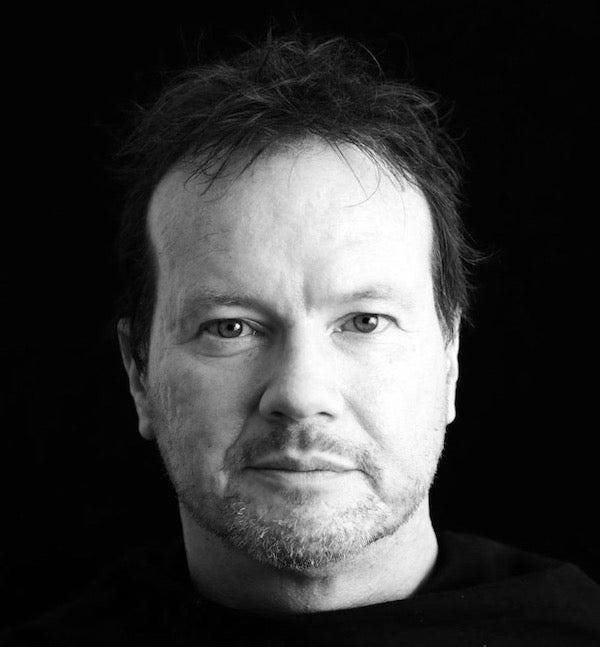
We live in an age of overwhelming forces. There is a creeping dread that the most significant problems we face—climate change, the global economy, nuclear waste, the pervasive spread of microplastics—are too vast, too distributed, and too complex for any one person to fully grasp. They are not events but atmospheres; not problems to be solved but conditions we now inhabit. Philosopher Timothy Morton gave this terrifying new reality a name: hyperobjects. These are entities so massively distributed in time and space that they transcend our ability to perceive them directly, forcing us to confront the chilling possibility that reality itself has outgrown the scale of human consciousness.
Background: The Philosopher of the Overwhelming
Timothy Morton, a philosopher and literary theorist, introduced the concept of “hyperobjects” to describe entities that are so vast and complex that they exceed human understanding and scale. This notion is prominently explored in his influential work, Hyperobjects: Philosophy and Ecology after the End of the World. Morton frames global warming as a hyperobject, highlighting the interconnectedness and temporality of ecological issues that challenge conventional ways of thinking about environmental ethics and responsibility.
In the context of hyperobjects, Morton discusses how these entities can evoke feelings of ungroundedness and disjointedness, disrupting our typical perception of progress and time. This unsettling experience is likened to a haunting, where the overwhelming presence of ecological crises becomes apparent only when the evidence is undeniable, such as toxic algae blooms in Florida, which stem from unsustainable agricultural practices.
Morton’s work emphasizes the importance of engaging with these hyperobjects through a critical lens, allowing individuals to explore their implications on personal and collective identities. This process of engagement is reflected in educational settings, where students are encouraged to critically analyze narratives around hyperobjects, transforming vast and abstract concepts into more relatable and localized experiences. Through such explorations, Morton aims to bridge the gap between philosophical inquiry and the pressing realities of climate change, advocating for an ecology that transcends traditional understandings of nature and matter.
The Anatomy of an Unthinkable Object
Hyperobjects, as conceptualized by Timothy Morton, exhibit several defining characteristics that distinguish them from ordinary objects. These properties challenge traditional understandings of causality, temporality, and locality, highlighting the complexities of human-environment interactions.
Viscosity
One of the primary characteristics of hyperobjects is their viscosity, meaning that they “stick” to the beings that encounter them. This quality renders individuals and communities deeply intertwined with hyperobjects, making it difficult to distance oneself from their influence, much like gravitational binding in spacetime curvature under general relativity. For example, the impact of global warming or nuclear materials persists across various contexts, adhering to both physical and social environments, thereby implicating all actors involved.
Nonlocality
Hyperobjects are fundamentally nonlocal, existing in a manner that transcends specific locations and temporal contexts. Their effects manifest diffusely across vast expanses, meaning that no local event can encapsulate the entirety of the hyperobject itself. For instance, while a tornado may be experienced as a localized phenomenon, it is a consequence of the broader and nonlocal hyperobject of climate change, which itself cannot be directly perceived but rather inferred through local manifestations.
Phasing
Phasing refers to the unique temporalities associated with hyperobjects. They exhibit a form of temporal undulation, where the implications of their existence reverberate across time, haunting the present while maintaining residues of the past. This characteristic illustrates how hyperobjects, such as climate, operate on timescales that exceed human lifespans, compelling a rethinking of how time and existence are understood.
