


History, as we are taught it, is a story of accidents. A war begins with a stray bullet. A financial crisis erupts from unforeseen greed. An empire falls due to its own internal decay. It is a chaotic, unpredictable narrative.
But what if there is another story? A second ledger of history, kept private, where the most pivotal events of the 20th century were not accidents at all? What if they were the results of a coherent, long-term strategy, executed by a network so powerful and so private that most people still do not know it existed?
This is not a conspiracy theory. It is the documented testimony of the one man who was granted access to their secret papers, and then dared to publish what he found. His name was Carroll Quigley. He was not a revolutionary; he was a pillar of the establishment. And his magnum opus, “Tragedy and Hope”, contains the quietest bombshell of modern history.
The Confession of an Insider
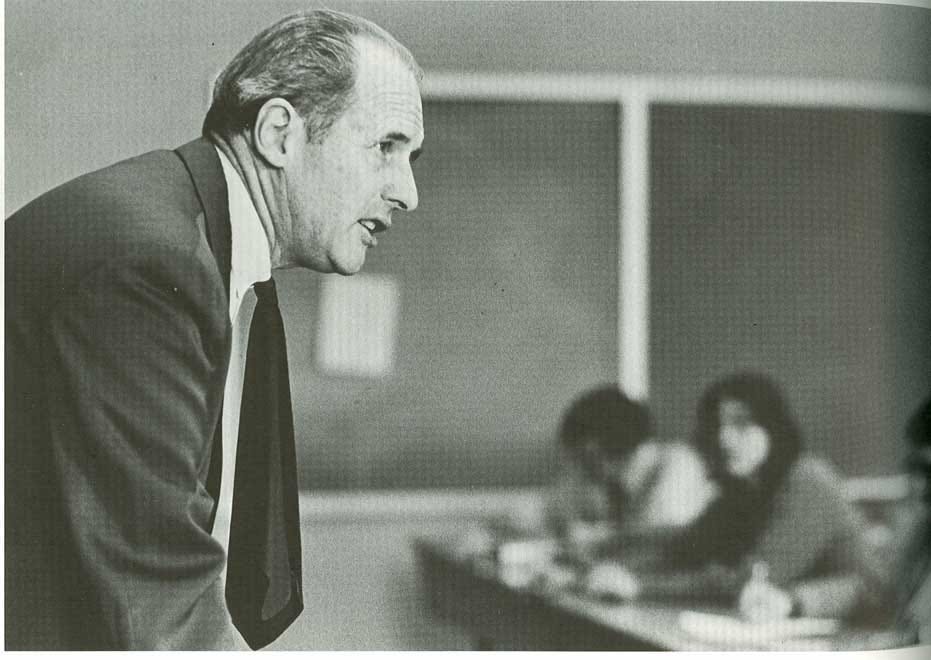
Imagine a professor at Georgetown University’s School of Foreign Service—a Harvard-educated historian who consulted for the Pentagon and mentored a future US President. This was Carroll Quigley. He was the last person you would expect to expose one of the most influential semi-secret organizations of the last 150 years.
Buried deep within his 1300-page academic history of the world, he calmly stated that for two years, he had been permitted to study the private records of an Anglo-American network. He wasn’t connecting dots; he was reading their meeting minutes. This network, he explained, was born from the vast fortune of Cecil Rhodes and organized by a man named Alfred Milner. Its goal was nothing less than to shape the course of global civilization.
But Quigley’s motive is what makes this story so unsettling. He wasn’t trying to tear the system down. In many ways, he was an admirer.
My chief difference of opinion is that it wishes to remain unknown, and I believe its role in history is significant enough to be known.
— Carroll Quigley
The Architecture of Invisibility
The group Quigley unmasked was not a cabal of cartoon villains. It was something far more sophisticated: an ecosystem of influence. They operated not through commands, but through the cultivation of a shared consensus among the elite.
They established intellectual forums like the “Round Table Groups” in Britain and its dominions. They created sister organizations in America, most notably the Council on Foreign Relations (CFR). These institutions were not secret, but their true purpose was discreet: to serve as the engine room where a small group could incubate ideas on finance and foreign policy, and then disseminate them through the most powerful people in the Western world.
They learned that true power isn’t about winning a single argument. It is about setting the boundaries of all acceptable arguments. It’s the difference between playing chess, and designing the board itself.
The story of how this network shaped the causes of World War I, engineered the post-war financial system, and then saw its own history systematically suppressed is not just a footnote. It is a masterclass in the mechanics of real power.
We are invited to passionately debate the final act of a play whose first two acts were written and rehearsed in private, by actors we were never meant to see.
This is only the threshold. To understand the full organizational chart of this network, the financial proofs that support Quigley’s claims, and how its methods continue to shape our world today requires a much deeper dive.

Quigley's real contribution is identifying where power actually lives. Everyone looks for who made the decision. He's pointing at something prior, who decided what the available decisions were.
That's a much quieter and much more total form of control in my opinion