


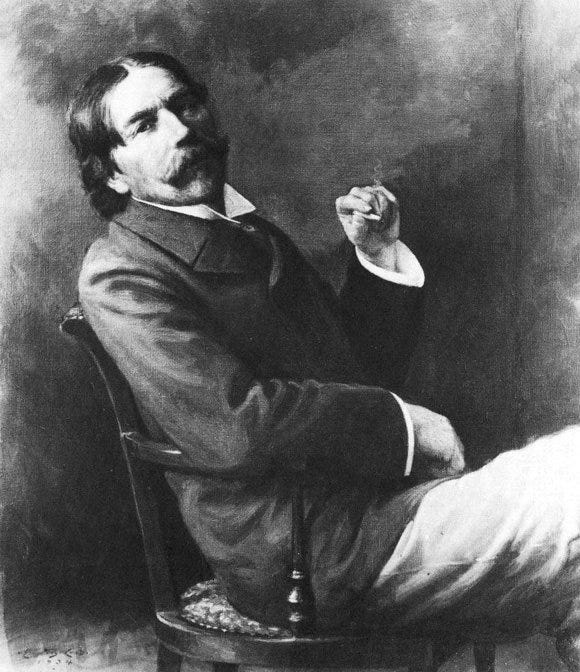
We are drowning in the shallow end of the day. The modern condition is a relentless performance of productivity, a culture where the overflowing inbox and back-to-back calendar have become the ultimate status symbols. More than a century ago, the economist and social critic Thorstein Veblen diagnosed the disease of a society obsessed with appearances, coining the term “conspicuous consumption” to describe the habits of the Gilded Age elite. What he could not have fully predicted was how this logic would mutate—transforming from a flaunting of leisure into a frantic, competitive flaunting of its exact opposite: busyness.
Veblen’s theories provide a critical lens through which to examine this phenomenon, particularly as a marker of modern precarity. He argued that the relentless pursuit of busyness has become a new status symbol, where being perpetually engaged in work is equated with success and personal worth. This cultural shift reflects deeper societal values that prioritize productivity and consumption over leisure and well-being, echoing Veblen’s concept of “conspicuous consumption,” where individuals signal their social status through their visible engagement in labor and economic activity.
The rise of technology and social media has intensified this culture of busyness, blurring the lines between work and personal life and creating an environment where individuals feel compelled to remain “always on.” Research indicates that this obsession with busyness adversely affects mental health and overall productivity, fostering a cycle of stress and dissatisfaction despite the superficial benefits of appearing industrious. As a result, many people experience feelings of precariousness, balancing the demands of constant engagement with the realities of economic instability and job insecurity.
Veblen’s insights into the socio-economic conditions that underpin this modern busyness highlight the tensions between genuine productivity and the performative nature of work in today’s economy. His critique suggests that, rather than fostering innovation and well-being, the emphasis on busyness often leads to a devaluation of meaningful labor and a reinforcement of societal inequalities. The implications of Veblen’s work resonate in ongoing discussions about work-life balance, the gig economy, and the societal pressures that contribute to burnout and discontent in modern life.
Historical Context
The Gilded Age and Economic Transformation
The Gilded Age (approximately 1870–1900) was a period of profound economic transformation in the United States, marked by rapid industrialization and urbanization. During this time, the U.S. transitioned from an agrarian economy to the world’s leading industrial power, driven by significant advancements in sectors such as railroads, steel, and oil refining. The expansion of rail mileage from 52,900 miles in 1870 to 193,000 miles by 1900 facilitated the movement of raw materials and goods across the country, while steel production soared from under 70,000 tons to over 10 million tons within the same period, largely thanks to figures like Andrew Carnegie.
This economic boom created vast fortunes for industrialists; for instance, John D. Rockefeller’s Standard Oil controlled nearly 90% of U.S. oil refining by the 1890s, yielding him weekly earnings of around $192,000, in stark contrast to the average worker’s weekly wage of less than $10.
Social Stratification and Class Dynamics
As wealth accumulated, the distribution of resources became markedly unequal, with the top 1% of Americans holding approximately 25% of national assets by 1890, and the top 10% controlling over 70% of the wealth. This concentration of wealth gave rise to a distinct leisure class, whose members engaged in “pecuniary employments” and displayed conspicuous consumption as a means of signaling status. Thorstein Veblen, a prominent critic of this societal structure, argued that the leisure class often viewed productive labor as beneath their status, leading to a systemic devaluation of industrial progress. Instead, he contended that predatory incentives emerged, prioritizing financial gain over innovation and efficiency, which ultimately stymied technological advancement.
Veblen’s Critique of Modernity
Veblen’s analysis emphasized that modern society was characterized by conflict and domination rather than harmony, positing that human instincts, such as the predatory instinct, played a crucial role in shaping economic behaviors. He highlighted the dualistic nature of modern capitalism, where industry aimed at improving human well-being was often overshadowed by the business world’s focus on profit maximization. This critique culminated in his concept of “conspicuous consumption,” which illustrated how social status was displayed through luxury goods, a behavior that he identified as prevalent among the wealthy classes.
Cultural Shifts and Institutional Influences
Veblen’s insights were informed by an evolutionary perspective that traced the development of social dynamics through history. He distinguished between industrial activity, which he associated with useful production, and pecuniary endeavors, which he critiqued for prioritizing financial gain over societal benefit. His work served as a precursor to institutional economics, highlighting how societal structures evolved from primitive communal instincts to complex modern economies marked by inequality and exploitation. This historical context not only shaped Veblen’s thought but also reflected the broader societal shifts that characterized the era, making his critiques increasingly relevant to contemporary discussions about economic behavior and social stratification.
Constant Busyness in Modern Society
The phenomenon of constant busyness has emerged as a significant aspect of contemporary life, particularly within the American cultural context. This busyness is often viewed as a status symbol, where being busy is equated with importance, value, and success in the fast-paced work environment. The modern workplace fosters a culture in which employees and managers alike gauge their worth and productivity by the sheer volume of work they can accomplish, leading to a neglect of rest, relaxation, and creativity.
The Culture of Busyness
Research indicates that this obsession with busyness can have detrimental effects on employee well-being and productivity. While people may aspire to embody the traits of busy individuals, studies show that those perceived as busy are often viewed as less happy. The concept of “productivity orientation” has also infiltrated leisure time, with individuals striving to maximize their experiences in the little free time they have, reflecting a deep-rooted belief in the value of busyness over relaxation.
Busyness as a Badge of Honor
In American culture, busyness has transformed into a badge of honor. Many individuals boast about their workload and the number of hours they dedicate to their jobs, even at the expense of their health and happiness. Sociologist Jonathan Gershuny notes that work, rather than leisure, has become the primary indicator of social status, with a growing number of Americans expressing a chronic lack of time.
