


Walk into any coffee shop today, past the glow of smartphones, and you’ll find a strange paradox. We are more connected than ever, yet profoundly alone. We chase individual freedom, curated lives, and personal brands, believing true fulfillment lies in shedding every constraint, every expectation.
We craft our identities like bespoke suits, designed to fit only us, perfectly. The ideal is “radical individualism” – a relentless pursuit of the self as the ultimate arbiter of meaning, purpose, and happiness. We are told to “find ourselves,” to “be authentic,” to “follow our own path.”
But in this relentless pursuit of autonomy, something vital has been lost. We’ve become disconnected, isolated, navigating a world that often feels vast and indifferent. This isn’t just a feeling; it’s a societal sickness, a profound loneliness that gnaws at the edges of our hyper-connected lives.
What if the cure for this modern malaise isn’t more self-discovery, but something far older, far more communal? What if the answer lies not in breaking free from all expectations, but in embracing them, consciously and ethically?
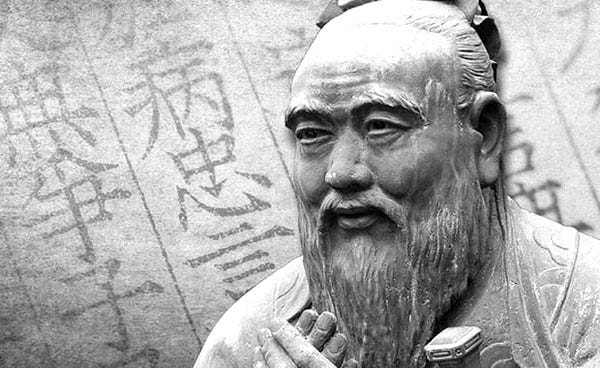
Enter Confucius, an ancient Chinese philosopher whose ideas, born over two millennia ago, offer a startlingly relevant diagnosis and a powerful, forgotten remedy for our disconnected age.
The Paradox of Our Age: Unbound Selves, Unmoored Lives
Our cultural narrative champions the self-made individual, the trailblazer who defies convention. We celebrate personal liberation from tradition, from family, from community expectations. The implicit promise is that once free, we will finally be happy, fulfilled, and authentically ourselves.
Yet, the statistics tell a different story. Rates of anxiety, depression, and social isolation are soaring. We are constantly searching for meaning, for belonging, for connection, often in fleeting digital interactions or consumeristic pursuits.
We’ve been encouraged to believe that conformity is the enemy, that social roles are shackles, and that “ritual” is mere empty tradition. This has left us untethered, adrift in a sea of endless choices, with no compass to guide our interactions, no shared language for building genuine community.
The “sickness of the self” is precisely this feeling of being disconnected, of having no fixed place in the world, no inherent web of relationships that define and support us. We seek fulfillment through radical individualism, yet we’ve never been more isolated.
Perhaps the greatest irony of our hyper-individualistic age is that the very pursuit of absolute autonomy has left us adrift, longing for the very connections we’ve been taught to transcend.
Confucius’s Radical Idea: Ritual as Connection, Not Conformity
For Confucius, the answer to a disordered self and a fragmented society lay in a concept called “li” (pronounced “lee”). Often translated as “ritual,” “propriety,” or “rites,” “li” is far more profound than mere etiquette. It’s the entire framework of how human beings ought to interact with one another, from grand ceremonies to the simplest everyday greetings.
Think of it not as stifling rules, but as a shared choreography for human existence. “Li” provides the patterns, the movements, the shared language that allows us to move gracefully through life together.
Without li, courtesy becomes tiresome, caution becomes timidity, courage becomes unruliness, and frankness becomes painful.
— Confucius, The Analects
This isn’t about blind adherence. It’s about embodying respect, empathy, and appropriate conduct. When we practice “li,” we are not just going through the motions; we are actively shaping our character and strengthening our bonds with others. It’s a performative ethics, where the act itself cultivates virtue.
Through “li,” our social roles – as children, parents, friends, citizens – are not rigid boxes, but dynamic spaces for expressing our humanity. They give us a script, not to imprison us, but to enable meaningful interaction.
The Relational Self: Finding “Ren” Through Others
At the heart of Confucius’s philosophy is “ren” (pronounced “wren”), often translated as “humanity,” “benevolence,” or “goodness.” But “ren” is not an isolated virtue; it is cultivated and expressed only in relation to others. You cannot be “humane” in a vacuum.
Confucius taught that the self is inherently relational. We are not standalone units, but nodes in a vast network of relationships. Our identity is forged in the crucible of our interactions, our duties, and our responsibilities to family, friends, and community.
How do we cultivate “ren” in an age that prioritizes self-interest?
Embrace Your Roles: Instead of viewing social roles as burdens, see them as opportunities to practice “ren.” How can you be a better child, parent, friend, colleague, or neighbor?
Practice “Shu” (Reciprocity): “Do not do to others what you would not want others to do to you.” This isn’t just passive avoidance; it’s active empathy, putting yourself in another’s shoes.
Cultivate “Li” Daily: Small acts of courtesy – a thoughtful greeting, a sincere thank you, mindful listening – are not trivial. They are the building blocks of a humane society.
The humane person, desiring to establish himself, seeks also to establish others; desiring to succeed himself, seeks also to help others succeed.
— Confucius, The Analects
This is the essence of Confucius’s ancient wisdom on ritual and social roles. It is not about conformity for conformity’s sake, but a powerful, forgotten cure for the modern sickness of the disconnected self. By consciously engaging in proper social conduct and understanding our place within a web of relationships, we build a robust, meaningful identity that transcends mere individualism.
Unlock deeper insights with a 10% discount on the annual plan.
Support thoughtful analysis and join a growing community of readers committed to understanding the world through philosophy and reason.
Beyond Loneliness: A Blueprint for Belonging
The Confucian vision isn’t about suppressing the individual; it’s about forming a more robust, integrated self through meaningful connection. It’s about realizing that true freedom isn’t the absence of all constraints, but the joyful embracing of ethical responsibilities that bind us to something larger than ourselves.
In our relentless quest for “authenticity” and “personal branding,” we’ve often inadvertently created a world of isolated islands. Confucius reminds us that we are not meant to be islands. We are meant to be bridges, connecting, supporting, and enriching one another through shared rituals, mutual respect, and a profound sense of common humanity.
The ancient cure for our modern loneliness lies not in looking inward for a hidden, perfect self, but in looking outward, engaging with others, and consciously building the humane society we all long for.
Summary: Following God’s commandments