


You’re at a party, laughing, sharing stories. Your friend, let’s call her Sarah, recounts a hilarious anecdote. You smile, nod, perhaps even interject with a well-timed “no way!” But beneath the surface of this convivial exchange, another, less conscious interaction might be taking place. Is Sarah truly being heard, seen, appreciated for the complex, independent being she is? Or, in a subtle, unacknowledged corner of your mind, is she serving a different purpose altogether? Is she, perhaps, a backdrop for your own performance, a sounding board for your anxieties, or even just a warm body to fill a momentary void?
This isn’t about malice. It’s rarely about deliberate intent to diminish or exploit. Instead, it’s about a pervasive, often invisible tendency within us to relate to others not as subjects with their own sovereign inner worlds, but as extensions of our own, as instruments to fulfill our unspoken needs, as objects in the grand theatre of our personal experience. We use people, not always intentionally, but almost inevitably. Why do we do this? And what is the cost?
The Internal Stage: Bollas and Functional Relationships
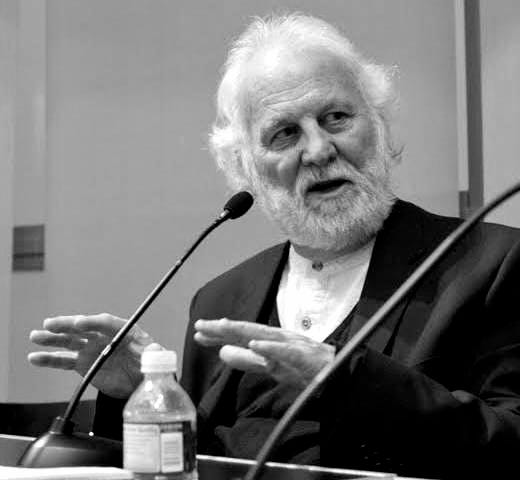
Consider the deep currents that shape our interactions. Psychoanalyst Christopher Bollas sheds light on this phenomenon, suggesting that we often use friends and partners not as entirely separate beings, but as functional tools to manage our own internal moods. Think about that for a moment. It’s a challenging idea, perhaps even a discomforting one.
We all have those people in our lives we call when we need a particular emotional response. The friend who always makes you laugh, the partner who provides unwavering comfort, the colleague who reliably offers pragmatic advice. These relationships are invaluable, of course. But Bollas’s insight pushes us to ask a harder question: are we engaging with the whole person, or primarily with the function they perform for us? Are they a complete orchestra, or just the specific instrument we need to play our own tune?
This isn’t to say love or friendship isn’t real. It is profoundly real. But within these bonds, an unconscious dynamic often plays out, turning others into what Bollas calls “transformational objects.” They are there to process something for us, to reflect something back, to stabilize an internal state that feels precarious. We seek their presence not always to connect with their independent self, but to regulate our own.
The Echo Chamber of Self
This objectification manifests in countless subtle ways. It’s in the conversations where we listen not to understand, but to formulate our next point. It’s in the expectation that our loved ones should anticipate and meet our unspoken needs, becoming mind-readers rather than independent agents.
What are the signs that you might be unconsciously treating someone like a prop?
Selective Listening: You hear what confirms your existing narrative or what you can use to transition to your own story, rather than absorbing the full nuance of what they’re saying.
Emotional Mirroring: You rely on them to reflect back a desired emotion – joy, calm, anger – without fully engaging with their own emotional state.
Unmet Expectations: You become frustrated or disappointed when they don’t perform their expected role, failing to see their own autonomy and boundaries.
Seeking Validation: You engage primarily to receive affirmation, applause, or reassurance, using them as an external gauge of your own worth.
The greatest danger for most of us is not that our aim is too high and we miss it, but that it is too low and we reach it.
— Michelangelo
When we reduce another human being to a function, we miss the vast complexity of their internal world. We deny their full subjectivity, their unique perspective, their struggles and triumphs that exist entirely separate from our own needs. We trap them in a role, and in doing so, we also trap ourselves in a limited, self-serving perspective.
Breaking the Spell: Reclaiming Subjectivity
So, how do we break free from this unconscious tendency? The first step, as with all profound change, is awareness. It requires a willingness to observe ourselves in action, to catch those moments where we’re relating to someone less as a “who” and more as a “what.”
It demands a conscious shift from a self-centred perspective to one of genuine curiosity about the other. This means active listening – not just hearing words, but attempting to grasp the underlying feelings, intentions, and experiences behind them. It means asking open-ended questions and truly waiting for the answer, rather than formulating your reply. It means allowing them to surprise you, to challenge you, to exist outside the box you’ve unconsciously built for them.
This is a practice of profound empathy, a radical act of recognizing the other’s complete autonomy. It means embracing their freedom to be different, to have their own agenda, to not always fit perfectly into the comforting, familiar roles we assign them.
Man is condemned to be free; because once thrown into the world, he is responsible for everything he does.
— Jean-Paul Sartre
To truly connect, we must bravely venture beyond the shadow of our own needs and step into the radiant, independent light of another’s being.
Unlock deeper insights with a 10% discount on the annual plan.
Support thoughtful analysis and join a growing community of readers committed to understanding the world through philosophy and reason.
Beyond the Prop: The Promise of True Connection
The journey from treating people like props to fully recognizing them as subjects is not easy. It challenges our deepest, often unseen, psychological architectures. It forces us to confront our own needs, our vulnerabilities, and our fears of being alone with our own internal states. But the reward is immeasurable.
When we commit to seeing the whole person, when we engage with genuine curiosity and respect for their independent self, relationships transform. They become richer, more resilient, and more deeply satisfying. We move beyond merely using others to manage our moods and begin to truly share in the tapestry of human experience. This is where true connection lies – not in the shadow of the object, but in the brilliant, mutual recognition of two independent souls.