


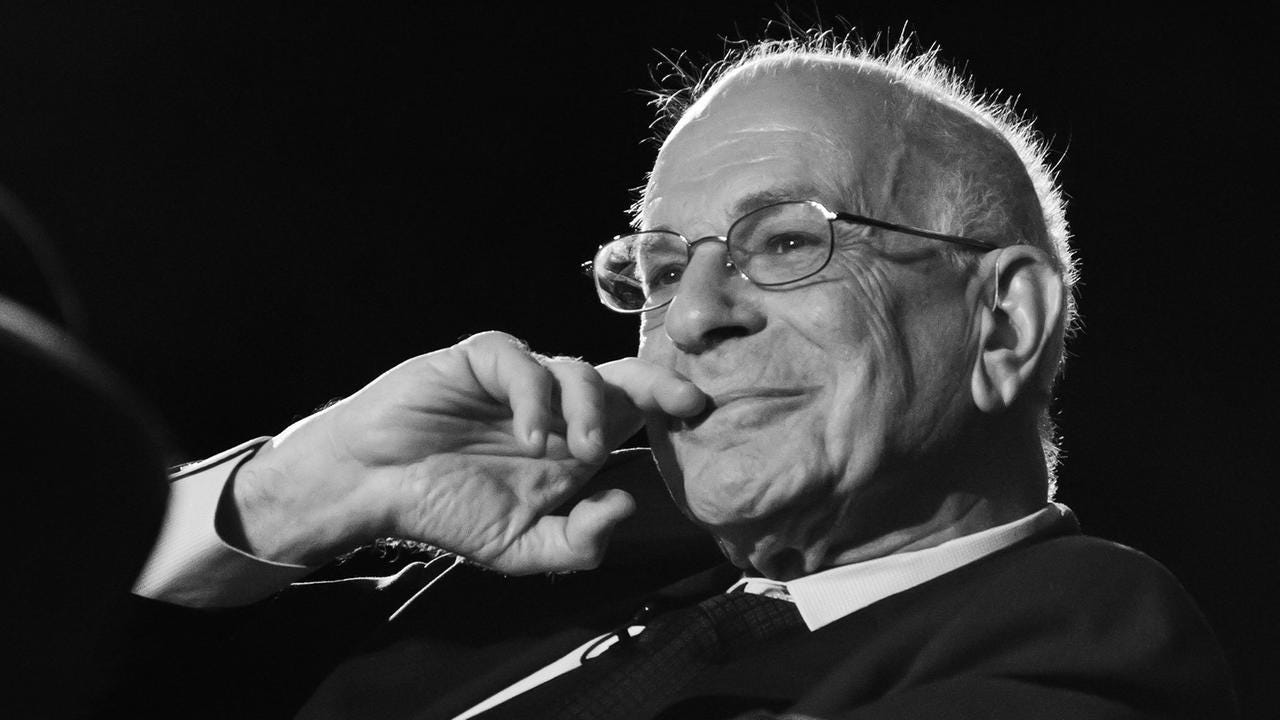
We believe our greatest intellectual enemies are the ones we can name: flawed logic, emotional reasoning, and cognitive bias. But what if the most destructive force in human decision-making is something far more random, invisible, and insidious? Daniel Kahneman, the Nobel laureate who reshaped our understanding of the mind, dedicated his final years to exposing this hidden saboteur. He called it “noise”—the staggering, unwanted variability in judgments that turns our most critical institutions into a lottery. From the courtroom to the emergency room, this random error ensures that decisions about our freedom, health, and wealth are often terrifyingly arbitrary, costing us more than we could ever imagine.
Background
Daniel Kahneman, born on March 5, 1934, is an eminent psychologist renowned for his groundbreaking work on the psychology of judgment and decision-making, particularly in the realm of behavioral economics. He was awarded the Nobel Memorial Prize in Economic Sciences in 2002 for his contributions to the understanding of human decision-making processes, which challenge traditional economic theories that assume rational behavior among individuals.
Kahneman’s most influential work, co-authored with his research partner Amos Tversky, culminated in the highly acclaimed book . This book synthesizes decades of research into cognitive biases, heuristics, and the dual systems of thought that influence human judgment. Kahneman’s insights reveal how various forms of noise—such as level noise and occasion noise—can lead to inconsistent judgments and poor decision-making outcomes. Level noise refers to the variability in judgments between different individuals, while occasion noise pertains to the fluctuations in a person’s own judgments due to factors like mood and environmental conditions.
Kahneman’s research also emphasizes the role of attention in shaping our perceptions of time and experiences. He identifies the “focusing illusion,” wherein individuals often misjudge the importance of specific factors—such as weather changes—on overall happiness and satisfaction. This phenomenon highlights the often misguided ways in which people plan their futures based on anticipated experiences rather than the actual quality of those experiences.
Throughout his career, Kahneman has demonstrated a remarkable humility, consistently questioning his own theories and acknowledging errors in his research, which sets him apart from many prominent academics. His work has not only reshaped the field of psychology but has also given rise to new disciplines, including behavioral economics and behavioral insights, which have influenced various sectors, including public policy and personal finance. As of March 27, 2024, Kahneman’s legacy continues to inspire a deeper understanding of the complexities of human decision-making and the pervasive effects of noise on judgment.
The Invisible Architecture of Error: Understanding Inconsistent Judgment
Inconsistent judgment refers to the variability in decisions made by individuals who are presented with the same set of facts. This phenomenon, often termed “noise,” is characterized by unwanted variability in judgments that should be uniform. Daniel Kahneman emphasizes that such inconsistency can lead to unfair outcomes, particularly in systems where uniformity is expected, such as the judicial system.
Definition and Impact of Noise
Kahneman defines noise as the random variability that causes differences in judgments and decisions among individuals, even when they are faced with identical information. Unlike biases, which are systematic errors attributable to specific cognitive mechanisms, noise is more random and less easily identifiable. For example, judges may impose vastly different sentences for similar offenses, reflecting a level of noise in judicial decision-making that can undermine the perceived fairness of the justice system. This inconsistency often remains unaddressed, as there is little public discourse regarding noise, leading to a lack of respect for the justice system when variability is recognized.
The Role of Cognitive Biases
Kahneman’s exploration of judgment also distinguishes between bias and noise. Bias represents average errors in judgment that stem from psychological mechanisms, while noise encompasses the erratic deviations from what should be expected under consistent decision-making conditions. Kahneman’s findings reveal that while cognitive biases can lead to predictable errors, the effects of noise are less transparent, making them harder to mitigate.
In practical applications, noise can manifest in various domains, including medicine, finance, and public policy. For instance, in healthcare, an objective assessment based on data can often lead to better outcomes than decisions made by individual practitioners who might be influenced by their unique interpretations of patient circumstances. Understanding and addressing noise can thus enhance the quality of decision-making across different fields.
Addressing Inconsistent Judgment
Efforts to reduce noise and promote consistency in judgments involve implementing systematic approaches to decision-making. Kahneman advocates for using algorithms and structured guidelines to minimize variability in judgments, particularly in settings where fairness is paramount, such as the legal system. However, resistance from individuals, such as judges who may view such approaches as threats to their professional autonomy, presents significant challenges.
Ultimately, recognizing the presence of noise and striving for consistency can lead to improved decision-making and fairness, reinforcing the importance of structured methods in reducing the hidden costs of inconsistent judgment.
The Hidden Tax: Quantifying the Costs of Inconsistent Judgment
Inconsistent judgment, often referred to as “noise,” can lead to significant financial costs across various sectors, including business, medicine, and criminal justice. Daniel Kahneman, along with co-authors Olivier Sibony and Cass R. Sunstein, emphasizes that inconsistent judgments frequently occur without apparent rationale, resulting in unfair and often invisible consequences for individuals and organizations alike.
The Nature of Noise
Noise differs from bias in that it represents random variability in judgments, which can lead to inconsistent outcomes even when the same analyst is evaluating similar cases under similar conditions. For instance, a fingerprint analyst may conclude that a print is a match on one occasion and inconclusive on another, purely due to variations in their judgment process rather than changes in the evidence. This inconsistency can result in financial losses that aggregate to billions, particularly when organizations fail to recognize the impact of noise on their decision-making processes.
Financial Implications
The economic ramifications of noise are profound. Research indicates that decision-making errors stemming from noise can lead to misvaluations in financial assessments. For example, if a case’s optimal value is $100,000, inconsistent judgments from professionals might estimate it at $85,000 or $115,000, causing substantial financial repercussions for organizations. The cumulative cost of these inconsistencies can exceed tens of millions annually, even in large firms, as noise remains a largely underexplored issue in operational audits.
Overcoming Noise Through Algorithms
Interestingly, statistical algorithms have been shown to outperform human judgment in terms of consistency and accuracy. Unlike humans, algorithms generate the same output for the same input, thereby eliminating the variability introduced by human decision-making. Organizations can mitigate
