


Everywhere you look online, someone is offering to wake you up. The internet is saturated with the rhetoric of the “red pill” and the “Matrix.” Across political factions, financial subcultures, and lifestyle communities, the foundational premise is identical: the reality presented to you is a fabricated illusion, designed by unseen elites to keep you docile. You are asleep, but with the right information, you can open your eyes, see the code, and escape the system.
We tend to treat this as a modern phenomenon—a symptom of algorithmic media, institutional distrust, and the digital age. We assume it is a new kind of political rebellion or a byproduct of the attention economy.
But the obsession with the “red pill” is not new. It is the sudden, explosive resurgence of a very specific, ancient psychological architecture. It is not a modern rebellion at all. It is a desperate search for a hidden signal in a world that feels overwhelmingly noisy.
The ultimate appeal of a conspiracy theory is not that it exposes chaos, but that it promises control; a rigged game is far more comforting than a random one.
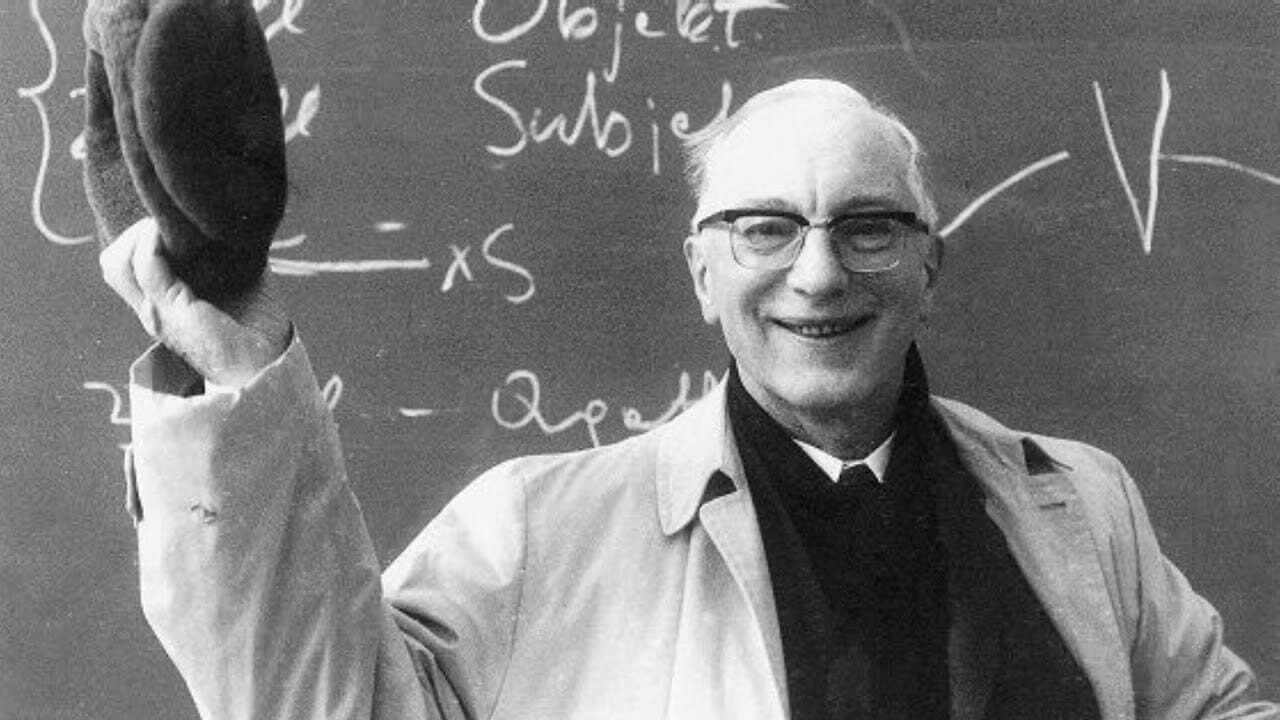
To understand why this mindset has captured millions, we have to look past the internet and turn to the mid-20th-century philosopher Eric Voegelin.
Voegelin spent his career analyzing how ancient spiritual errors mutate into modern political movements. His most powerful diagnostic tool was his revival of the concept of Gnosticism.
In antiquity, Gnosticism was a sprawling religious movement that viewed the material world not as a flawed but beautiful creation, but as a prison. The Gnostics believed the universe was constructed by a malicious or incompetent lesser deity (the Demiurge) designed to trap divine sparks of human consciousness in physical bodies.
For the Gnostic, the world around them was literally a matrix—an evil illusion. Consequently, salvation could not come through faith, good works, or civic participation. Salvation could only be achieved through gnosis: secret, esoteric knowledge. Only by acquiring the hidden truth about the nature of the prison could a select few awaken from their slumber and transcend the system.
Voegelin argued that while the ancient sects vanished, the Gnostic impulse never died. Whenever society becomes too complex, and whenever traditional frameworks of meaning collapse, the Gnostic reflex returns. We stop trying to improve reality and start trying to decode it.
The deeper implication of Voegelin’s framework is that it completely inverts how we understand modern “red pill” culture.
Taking the red pill is universally framed by its advocates as an act of intellectual bravery. It is branded as the willingness to face harsh, uncomfortable truths that the “sheep” are too weak to acknowledge.
But structurally, modern Gnosticism is an act of profound psychological retreat.
If the world is merely complex, messy, and driven by a collision of incompetence, competing interests, and historical accidents, then navigating it requires immense patience, humility, and compromise. You have to engage with people who disagree with you. You have to accept that no one is entirely in control.
But if the world is a Matrix—if it is secretly controlled by a monolithic, malicious system—then reality is actually very simple. There is no need for nuance. There is no need for civic compromise. You just need the cheat codes. The red pill trades the exhausting anxiety of a chaotic world for the soothing certainty of a rigged one. It offers the ultimate ego boost: you are no longer a confused citizen; you are an awakened elite.
To declare that everyone else is an NPC is to relieve yourself of the burden of empathy; if they are not real, you do not owe them your understanding.
You can see this Gnostic architecture most clearly in the modern “manosphere” and extreme hustle-culture communities.
The vocabulary of these spaces is explicitly, almost comically, Gnostic. The uninitiated masses are dismissed as “NPCs” (Non-Player Characters), a term that literally strips them of their internal consciousness and renders them part of the simulated environment. The societal structures of dating, education, and employment are framed as “the Matrix,” a system designed exclusively to extract value from the blind.
Crucially, the solution offered by the gurus of these communities is never structural reform. A Gnostic does not want to fix the prison; they want to hack it.
The modern guru sells gnosis. Whether it is a $500 course on the “hidden laws” of female psychology, access to a private Discord server with secret crypto trading signals, or a manifesto on how to exploit the fiat banking system, the promise is the same. Once you possess the secret knowledge, you transcend the rules that bind the sleeping masses. You learn to manipulate the illusion to your advantage.
This is why these movements are ultimately sterile. As Voegelin warned, Gnosticism inevitably leads to a deep alienation from reality.
Because the modern Gnostic believes the visible world is fundamentally fake and corrupt, they cannot engage with it constructively. They become trapped in a state of permanent suspicion. Every news event is a false flag; every institutional failure is a deliberate conspiracy; every dissenting voice is an agent of the Matrix. The search for secret knowledge becomes an endless, paranoid loop that isolates the believer from their community, their institutions, and eventually, their own humanity.
True philosophy is the exact opposite of gnosis.

Or save 25% and get 3 months free
Philosophy is an open inquiry. It is the love of wisdom that seeks to understand reality as it actually is, with all its tragic complexity, friction, and ambiguity. It does not promise a secret exit door, and it does not divide humanity into the awakened and the asleep. It demands that we live in the world, not above it.
True philosophy demands that we engage with the friction of reality, while the red pill offers the seductive, sterile illusion of rising above it.
The temptation of the new Gnosticism is strong because the modern world is genuinely difficult to decipher. But retreating into the comforting illusion of secret knowledge only deepens the crisis. We do not need more cheat codes for a simulated world; we need better frameworks for navigating the real one.
Understanding the hidden architecture of our culture—moving beyond cheap cynicism to grasp the deeper philosophical currents—is the core project of Philosopheasy. In the full edition, we build the systematic frameworks required to navigate a complex world without retreating into illusion.
the nervous system piece underneath this is what gets me. a chaotic world with no clear enemy is physiologically exhausting to inhabit. the red pill offers something the dysregulated nervous system craves more than truth… pattern. certainty. a named threat. even a wrong explanation feels better in the body than no explanation at all.
what I find with somatic work is that the people most drawn to these frameworks are often carrying unprocessed fear and grief that found nowhere else to land. the conspiracy becomes the container. not because they’re stupid but because the body needed somewhere to put it.
really well written. thank you.
This is a sharp diagnosis. The “red pill” is most seductive precisely because it presents comfort as courage. It tells the anxious person that the world is not tragic, complex, and difficult to understand, only hidden, rigged, and waiting to be decoded. That is why the language of awakening can so easily become a new sleep. True wisdom does not divide humanity into the enlightened and the disposable. It teaches us to remain awake inside reality, with all its friction, ambiguity, and moral demand.