


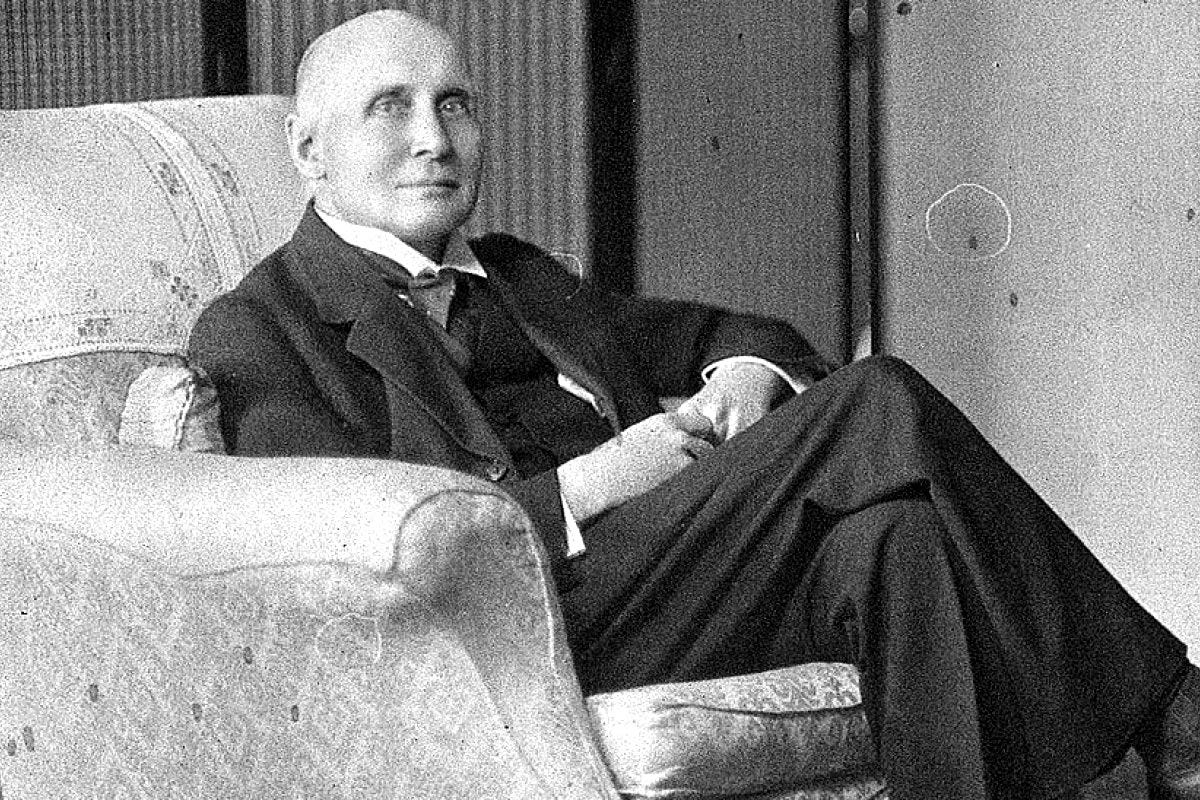
We live in a world of nouns. We are categorized, labeled, and filed away by our job titles, our diagnoses, our social media bios. We think of ourselves as fixed entities, solid objects navigating a world of other solid objects. But what if this entire framework is a profound and dangerous illusion? What if you are not a thing at all, but a process? This is the terrifying and liberating truth offered by philosopher Alfred North Whitehead, who argued that our very grammar betrays us. His assertion that “You aren’t a noun; you’re a verb” is not a poetic flourish but a radical metaphysical claim—a call to awaken from the slumber of stasis and recognize that existence is a continuous, dynamic, and creative unfolding.
The Philosophy of Flow
Alfred North Whitehead’s philosophical contributions are often framed within the context of process philosophy, which emphasizes the dynamic nature of reality over static entities. Central to this perspective is the notion that existence is fundamentally characterized by processes rather than discrete objects. Whitehead argues that our experiences are woven from relationships, highlighting the importance of context and interaction in shaping our understanding of the universe. He posits that the present is continuously informed by the past while simultaneously influencing the future, leading to a complex web of interrelated processes that define existence itself.
In Whitehead’s view, concepts like “Importance” and “Expression” are essential to understanding the interconnectedness of beings and their environments. Importance, according to Whitehead, is rooted in the monistic aspect of the universe, representing a universal significance that diminishes when applied to finite individuals. In contrast, Expression arises from the activity of finite occasions impacting their surroundings, showcasing the interplay between the individual and the collective. This philosophical framework not only reinterprets traditional metaphysical concepts but also has implications for various scientific domains, from quantum physics to the neuro-psychological foundations of value judgments.
No man ever steps in the same river twice, for it’s not the same river and he’s not the same man.
Heraclitus
The shift towards process-oriented thinking emerged as a response to the limitations of earlier philosophical paradigms, particularly those aligned with positivism, which sought to ground philosophy in empirical science. Whitehead’s emphasis on speculative explanations for the origins and directions of emergent evolution challenged this view, proposing that philosophical inquiry should engage with the complexities of existence beyond mere analysis of observable phenomena. His ideas resonate with earlier thinkers, including Plotinus, while also paving the way for modern interpretations in fields such as theology, where his concept of a process view of God has influenced figures like Charles Hartshorne.
The Self as a Continuous Event
The phrase “You’re a verb” encapsulates a philosophical view that emphasizes the dynamic and process-oriented nature of existence, as articulated by Alfred North Whitehead. Rather than viewing individuals as static entities or nouns, Whitehead’s perspective invites us to consider ourselves as active participants in a continuous process of becoming and self-creation. This conceptual shift is significant as it challenges conventional notions of identity and existence.
