


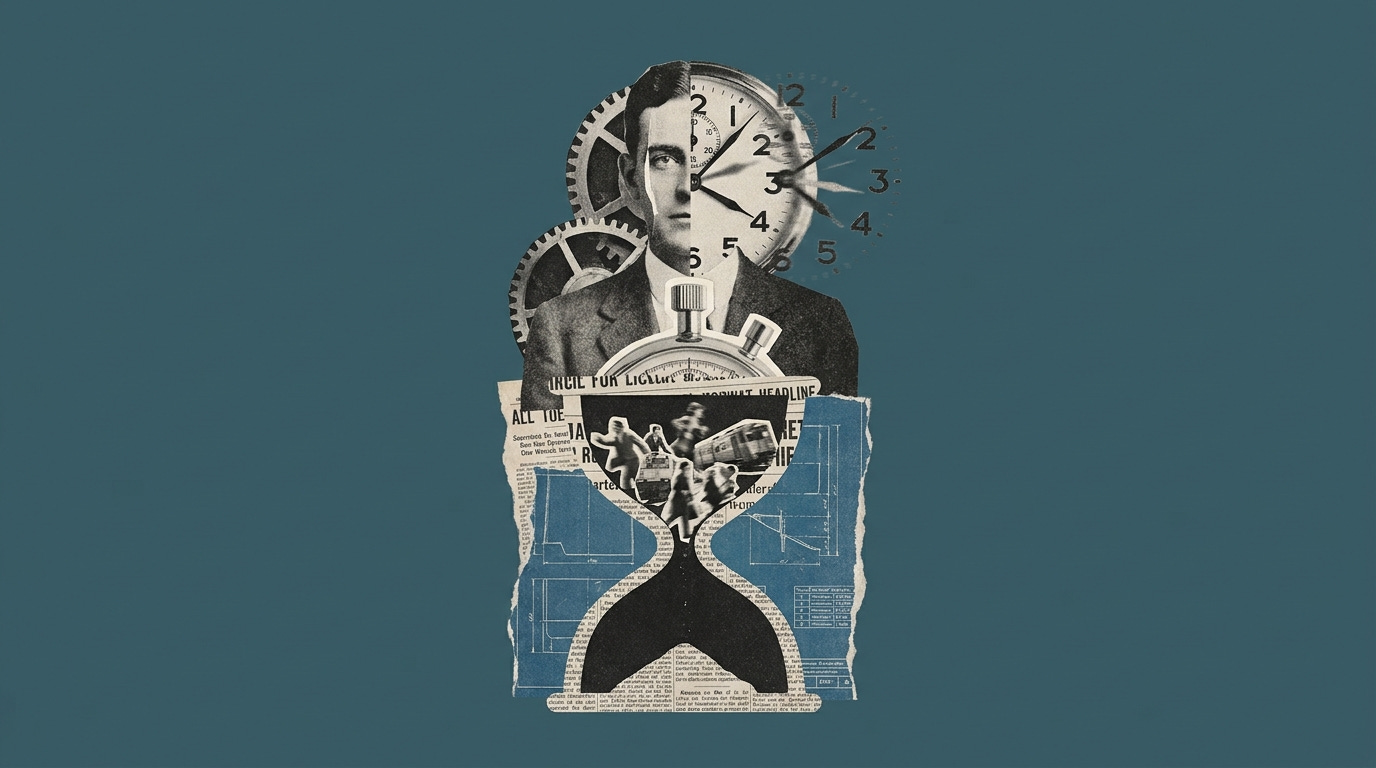
If a webpage takes three seconds to load, you feel a spike of irritation. If a text message goes unanswered for an hour, it can feel like a personal slight. We have engineered a reality where the gap between a desire and its fulfillment is measured in milliseconds. We call this efficiency. We call it progress.
But beneath the surface of this frictionless existence, a strange paradox has taken hold: the more time we save through instantaneous technology, the less time we actually feel we have.
We are suffering from profound temporal poverty. We treat this daily exhaustion as a personal failure—a flaw to be fixed with better morning routines, tighter calendar blocking, or the latest productivity app. But your lack of time is not a scheduling error. It is a structural condition.
We have misdiagnosed the modern sickness. We do not have a time-management problem. We have a speed problem.
By systematically hunting down and eliminating every ounce of delay in our daily lives, we have not liberated ourselves. Instead, we have trapped ourselves in a frantic, perpetual present, destroying the very psychological space required for anticipation, reflection, and meaning.
The Logic of the Shipwreck
To understand why our lives feel simultaneously so convenient and so suffocating, we have to look past the usual critiques of technology and look at the invisible force driving it all: acceleration.
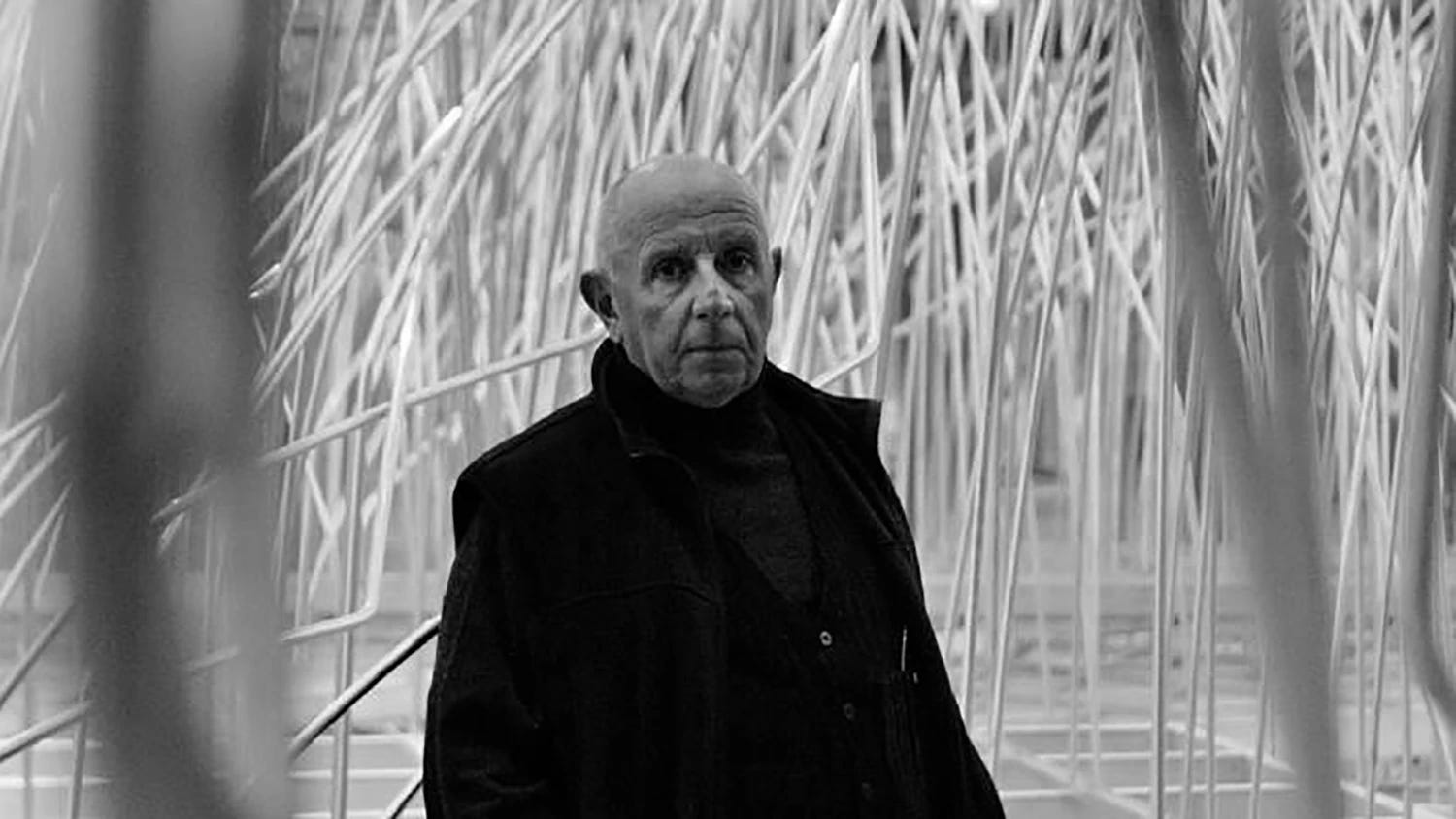
The late French philosopher Paul Virilio spent his life studying this phenomenon. While other thinkers analyzed society through the lenses of money, class, or political power, Virilio looked at the world through the lens of speed—a field of study he called dromology.
Virilio argued that speed is the hidden organizing principle of human history. Whoever moves the fastest dictates the rules of reality. But Virilio also issued a profound warning about the nature of invention. He famously noted that every new technology secretly invents its own specific catastrophe.
“When you invent the ship,” Virilio wrote, “you also invent the shipwreck; when you invent the plane, you invent the plane crash.”
So, what did we invent when we created a society of instant communication and infinite digital access?
According to Virilio, we invented the shipwreck of human time. By inventing the capacity to do everything immediately, we invented the psychological impossibility of doing nothing. We invented a world where delay is viewed as a failure, a glitch, or an insult.
This is the interpretive key to our modern exhaustion: Delay is not dead time. It is the necessary psychological habitat for human depth.
When you eliminate the delay between a question and an answer, you eliminate the space where independent thought incubates. When you eliminate the delay between a desire and a purchase, you eliminate the space where anticipation builds. Delay was the buffer that protected our minds from the demands of the outside world. Without it, we are entirely exposed.
Trapped in the Perpetual Present
The disappearance of delay has fundamentally altered how we experience reality. We are no longer moving toward a future; we are merely trying to keep up with an accelerating present.
Historically, the future was a place you had to wait for. It was a destination built through slow, deliberate action. But in a high-speed society, the future collapses. When news is updated every three minutes, when trends cycle in a matter of days, and when crises erupt and vanish from the timeline before they can be fully understood, long-term thinking becomes impossible.
You cannot plan for a decade from now when your nervous system is biologically locked into managing the next ten minutes.
This creates a culture of pure reaction. Deep reading, complex relationship-building, and critical analysis all share one common requirement: they demand duration. They require you to sit with unresolved tension. They require friction.
Speed, by contrast, demands reflexes. It asks you to like, share, reply, and move on. When speed becomes the dominant value of a culture, intelligence is redefined. Wisdom—which requires slow digestion—is devalued. Quickness—the ability to react instantly—is elevated. We mistake the speed of our reactions for the depth of our understanding.
The Weaponization of the Instant Reply
To see how deeply this logic has infiltrated our intimate lives, you only need to look at the communication tools in your pocket. Consider the invention of the “read receipt.”
Before instant messaging, communication had built-in, physical delays. If you mailed a letter, you knew it would take days to arrive and days to return. Even in the era of landline telephones or early email, a delayed response was assumed to be a natural byproduct of life. The delay belonged to you. It was your private time to think, to feel, and to craft a response.
The read receipt eradicated that private buffer.
The moment those tiny indicators turn blue, a new psychological contract is forced upon you. You know they saw it. They know you know they saw it. The space for a thoughtful, measured response instantly collapses into a demand for an immediate reaction. The delay is no longer seen as a natural pause; it is interpreted as withheld affection, passive aggression, or suspicious avoidance.
This is Virilio’s dromology in everyday action. The speed of the technology dictates the emotional rhythm of the relationship. The tool does not just deliver the message faster; it accelerates the social obligation, turning human connection into a ticking clock.
When applied across every domain of life—from the expectation of an instant reply from a coworker at 8:00 PM, to the expectation of next-day delivery, to the endless churn of a social media feed—the result is a nervous system under constant siege. We are running a sprint with no finish line, terrified of falling behind in a race we never consciously agreed to enter.
Reclaiming the Friction
We cannot out-optimize a system designed to accelerate forever. If you try to match the speed of modern life, you will simply burn out. The solution to temporal poverty is not to find ways to move faster, but to find the courage to intentionally slow down.
We have to recognize that friction is not our enemy. The pauses, the waiting, the empty afternoons, the unanswered messages—these are not inefficiencies to be eradicated. They are the structural supports of a meaningful life. Just as music requires silence between the notes to be anything more than a wall of noise, a human life requires delay to be anything more than a blur of reactions.
Reclaiming our future means actively reintroducing delay into our daily architecture. It means protecting the gap between stimulus and response. It means allowing ourselves the luxury of not knowing immediately, not replying instantly, and not consuming mindlessly.
Delay is the ultimate modern rebellion. It is the only space where you are still entirely yourself.
Reclaiming our time requires more than just turning off notifications; it requires understanding the hidden architectures that accelerate our lives against our will. In this week’s Deep Dive, we dismantle the mechanics of the attention economy and explore how to build structural boundaries that protect your capacity for deep, unhurried thought.
very well articuled. i think the modern impulse to make everything instantaneous is tied intricately to capitalism - the capitalistic goal to optimize every moment of the working class to contribute to the growth of society (which in reality is inflating shareholder value). we are meant to have no time for ourselves, trapped in a quicksand of optimizing productivity to obtain more free time, which we never succeed at anyway. reply fast, receive fast, consume mindlessly - and use the time saved to be more productive. We live under the guise that this time saved is time we get to reclaim for ourselves, but capitalism has turned that into a sweet lullaby to soothe ourselves with while subscribing to the same habits that only benefits the system.
Well written 🔥