


You walk into a friend’s house, and immediately, you feel it: a sense of calm, an invitation to relax, a subtle harmony that resonates deep within. Or perhaps, conversely, you enter a space that feels chaotic, sterile, or utterly devoid of personality, leaving you with a vague sense of unease. It’s more than just decor, isn’t it? It’s a feeling, an atmosphere, a whispered story of the lives lived within those walls. But what if this feeling is not just a pleasant aesthetic, but a fundamental building block of our very being?
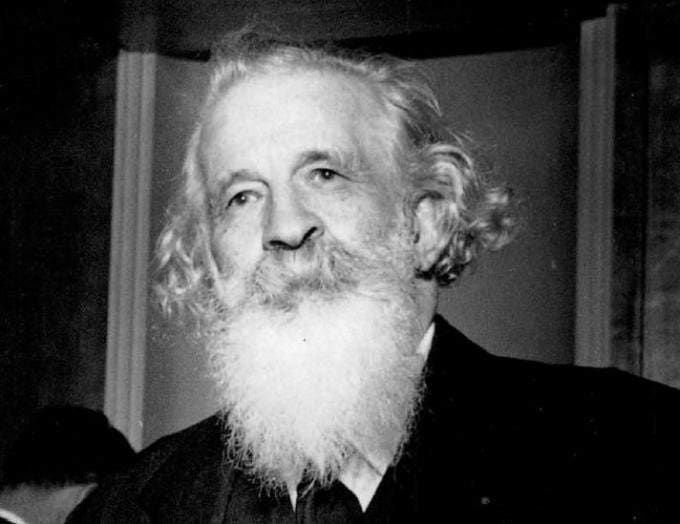
The French philosopher Gaston Bachelard, in his seminal work “The Poetics of Space,” argues precisely this: that our physical dwelling is not merely a shelter for the body, but a profound crucible for the soul. More than that, he posits a radical idea: you cannot structure your soul without first poetically structuring your physical home. It’s an assertion that challenges our understanding of self-improvement, suggesting that the path to inner order might just begin with the thoughtful arrangement of our external world.
The Home as Our First Cosmos
Bachelard invites us to consider the home not as a static object, but as a living, breathing entity. It’s the place where we dream, where our memories take root, and where our imaginations are given free rein. For him, the house is a universe, a “first cosmos” where our most primal experiences of shelter, intimacy, and solitude are forged. Think about it: the attic that holds forgotten treasures and childhood mysteries, the cellar that hints at the unknown, the cozy corner by the window where hours melt away in reverie.
These aren’t just architectural features; they are psychological landscapes. They provide the imaginative frameworks through which we understand the world and ourselves. How can we truly understand our inner self if the very shell that contains our daily life is formless, uninspired, or devoid of personal meaning?
For our house is our corner of the world. As has often been said, it is our first universe, a real cosmos in every sense of the word.
— Gaston Bachelard
Beyond Mere Utility: Structuring with Intention
To “poetically structure” a home doesn’t mean hiring an expensive interior designer or adhering to transient trends. It’s about infusing intention, memory, and imagination into every nook and cranny. It’s about choosing objects not just for their function, but for their ability to evoke feeling, recall history, or spark a dream. It’s about cultivating spaces that invite contemplation, foster creativity, and offer genuine refuge from the external world.
Consider the books on your shelf, the art on your walls, the worn armchair by the fireplace. Are these simply items, or are they totems of your intellectual curiosity, your aesthetic sensibilities, your moments of peace? When every element of your home tells a story, resonates with personal significance, and contributes to an overall feeling of harmony, you are, in essence, building a sanctuary for your spirit.
This careful cultivation of our living space becomes an outward manifestation of an inward process. It’s a dialogue between who we are and where we live, each influencing and shaping the other.
The Soul’s Blueprint: Inner and Outer Harmony
Bachelard suggests a profound synchronicity: the chaos of an untended home can mirror the clutter of an unfocused mind, while a home imbued with care and intention cultivates a similar order within the soul. The meticulous, imaginative arrangement of our physical home lays down the foundational pathways for a well-ordered, resilient, and creatively fertile inner life.
Think of it as an ongoing project of self-authorship. Just as we refine our thoughts and beliefs, we must also refine our dwelling. This isn’t about perfection; it’s about presence and purpose. What does it mean to poetically structure your home? Here are a few thoughts:
Curate memories: Surround yourself with objects that hold personal history and evoke positive emotions.
Cultivate comfort: Create spaces that genuinely invite relaxation and introspection, tailored to your needs.
Embrace quiet corners: Designate areas for solitude, reading, or simply being, away from distraction.
Engage the senses: Pay attention to light, sound, texture, and scent, crafting an atmosphere that nourishes.
A house that has been experienced is not an inert box. In it, the human body dreams, sleeps, thinks, lives.
— Gaston Bachelard
Unlock deeper insights with a 10% discount on the annual plan.
Support thoughtful analysis and join a growing community of readers committed to understanding the world through philosophy and reason.
A Continuous Act of Creation
Gaston Bachelard’s argument is a potent reminder that our homes are far more than just structures of brick and mortar. They are extensions of ourselves, canvases for our imagination, and vital partners in the ongoing process of structuring our souls. The act of shaping our home poetically is, ultimately, an act of self-creation, a continuous dialogue between our inner world and the space we inhabit.
So, take a moment to look around your own dwelling. What stories does it tell? What feelings does it evoke? Is it a mere container, or is it a carefully considered stage upon which the drama of your soul unfolds? Perhaps, by tending to the spaces we call home, we can begin to build the sanctuaries our souls truly deserve.
This is beautifully articulated.
Bachelard is right to recognize that the home is not merely a structure, but a psychological and imaginative field in which the soul takes shape. Space is never neutral. It holds memory, intention, and vibration.
And yet, I would gently extend the thought further.
The home may be our “first cosmos,” but it is not the ultimate one. Many throughout history have structured their souls in monasteries, in deserts, in forests ~ even in prison cells. What made those spaces transformative was not their architecture, but the consciousness brought into them.
Perhaps the deeper truth is reciprocal: we poetically structure our homes because we are already attempting to structure our inner life. The outer space reflects the inner state ~ and over time, the two begin to harmonize.
A cluttered room can mirror an unsettled mind.
But a disciplined, compassionate consciousness can also sanctify even the simplest shelter.
In that sense, the true architecture of the soul is awareness. The home becomes an instrument — a partner in cultivation ~ but not the source of order itself.
When consciousness is imbued with intention, even a small room becomes a universe.
And perhaps that is the greater poetry.
I see my home as an extension of myself. Being an artist and an aspiring polymath, my home reflects my artistic inspiration and is a testimony to my many interests and hobbies. And as a spiritual person who meditates regularly, it is also embued with this energy.
Everybody who comes to visit feels this straight away.