


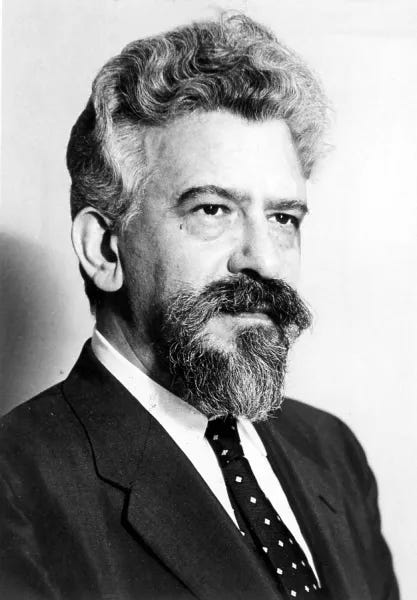
We have become masters of space, but slaves to time. Our civilization is built on the conquest of the physical world—taller buildings, faster transit, more data crammed into smaller devices. Yet in this relentless expansion, we have hollowed out the dimension of time, reducing it to a mere resource to be managed, optimized, and ultimately, exhausted. We fill our calendars but empty our souls, caught in a frantic productivity that leaves us spiritually bankrupt. It was into this modern crisis that the theologian and philosopher Abraham Joshua Heschel spoke, not with a new time-management technique, but with an ancient and radical proposition: that our salvation lies not in conquering more space, but in sanctifying time itself.
Heschel’s work critiques contemporary society’s relentless pace and the resultant disconnection from spiritual values. He posits that true fulfillment comes not from material success, but from mindful engagement with time and the creation of sacred moments for reflection and tranquility. The concept of the Sabbath as a “palace in time” serves as a cornerstone of his argument, illustrating how intentional pauses in daily life can nurture a deeper connection with the divine and oneself. By establishing personal sanctuaries, individuals can cultivate resilience and mental clarity, essential for navigating the complexities of modern existence.
It is not that we have a short time to live, but that we waste a lot of it. Life is long enough, and a sufficiently generous amount has been given to us for the highest achievements if it were all well invested.
Seneca
Heschel’s philosophy has sparked contemporary discussions around mindfulness, personal well-being, and ethical living, resonating particularly in today’s fast-paced world where individuals increasingly seek balance and spiritual depth amidst chaos. His ideas promote a broader understanding of time as not merely linear but as a sacred space for growth, reflection, and ethical engagement. The impact of Heschel’s thought extends beyond religious circles, influencing interfaith dialogue and social activism, as his emphasis on the divine in everyday life continues to inspire new generations of thinkers and practitioners. Despite the general acclaim for Heschel’s insights, some critiques emerge regarding the applicability of his theories in a
