


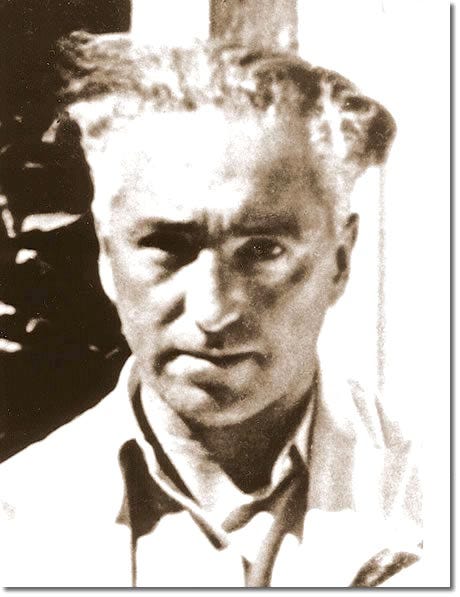
We are taught to believe that politics happens in public squares, in voting booths, and through televised debates. But what if the most potent political force is not ideology, but desire? What if the architecture of tyranny is built not with laws and armies, but with the shame and silence that surround our most intimate lives? This was the explosive, and largely forgotten, argument of Wilhelm Reich, a student of Freud who dared to suggest that the battle for freedom is lost or won in the landscape of human sexuality. He argued that a society that represses pleasure inevitably produces citizens who crave their own chains.
Wilhelm Reich (1897–1957) was an Austrian psychoanalyst and social theorist known for his controversial theories linking sexual repression to authoritarianism. Drawing on his background in psychoanalysis and his experiences during the rise of fascism in Europe, Reich argued that societal norms that suppress sexual expression create psychological conditions conducive to authoritarian control. He posited that individuals raised in repressive environments develop a fear of pleasure and internal conflicts that predispose them to accept hierarchical authority in personal and political realms. This connection forms the basis of his seminal work, where he critiques how repressed sexuality can manifest in neurotic behaviors and mass submission to totalitarian regimes.
Reich’s ideas challenge conventional understandings of psychology by suggesting that sexual repression is not merely a personal issue but a societal one that fosters loyalty to authoritarian structures. He contended that families often serve as “miniature states,” instilling submissive attitudes in children that carry over into broader social dynamics. This cycle of submission perpetuates itself as individuals internalize authoritarian values, which can lead to a populace that is more likely to endorse oppressive ideologies out of fear and conditioned loyalty.
The controversy surrounding Reich’s theories is significant, as he faced expulsion from the psychoanalytic community for his radical views and political activism. His critique of conventional psychoanalysis and the socio-political implications of sexual repression has sparked ongoing debate among psychologists and sociologists, with some acknowledging the relevance of his ideas while others criticize them for oversimplifying the complexities of human behavior and social structures.
Reich’s work remains influential in discussions about the interplay between personal freedom and societal authority, emphasizing that sexual liberation is essential for individual and collective emancipation. His theories suggest that addressing the psychological roots of repression can be a pathway toward challenging authoritarianism and fostering a more liberated society.
Background
Wilhelm Reich was born on March 24, 1897, in Galicia, a region that was part of the Austro-Hungarian Empire, in a middle-class Jewish family. His father, a domineering and authoritarian figure, significantly impacted Reich’s early life and psychological development. The family environment lacked religious upbringing, and communication was limited to German, isolating Reich from both local Ukrainian and Yiddish-speaking Jewish children. This isolation was compounded by personal tragedy; Reich idolized his mother, who took her own life when he was just 14 years old, after an affair was revealed. The subsequent deaths of his father and brother from tuberculosis left a profound mark on Reich, shaping his views on authority and human relationships.
Reich’s interest in the dynamics of human behavior and authority was further influenced by his experiences during childhood and adolescence, where he observed that societal norms often suppressed natural instincts and desires, particularly concerning sexuality. He argued that such repression cultivated a fear of pleasure, leading to what he termed “characterological armoring,” a phenomenon characterized by muscular tension that reflected emotional conflict and fear. This armoring, according to Reich, resulted in a craving for authority, a lack of responsibility, and an inclination towards authoritarianism.
As a member of the Vienna Psychoanalytic Society and a close associate of Sigmund Freud, Reich made significant contributions to psychoanalysis, particularly in understanding the interplay between sexuality and social behavior. His political activism during the tumultuous 1930s in Austria and Germany, where he joined the Communist Party, further fueled controversies surrounding his ideas. Reich’s insistence on the importance of sexual liberation and his critique of societal structures that enforced repression often placed him at odds with his contemporaries in the psychoanalytic community, leading to his eventual expulsion from the German Psychoanalytic Association.
Reich’s theories posit that individuals raised in environments that negate sexual and emotional expression develop psychological issues that manifest as a propensity for authoritarianism. He believed that the resolution of these inner conflicts through awareness and acceptance of one’s sexual nature was essential for personal and societal liberation.
Sexual Repression
Sexual repression refers to the conscious or unconscious suppression of sexual desires, thoughts, or behaviors. It is a phenomenon influenced by various factors, including cultural norms, personal beliefs, and past experiences, often leading individuals to internalize feelings of shame or guilt surrounding their sexuality. This suppression can manifest as limited sexual expression, resulting in negative emotional and physical effects, such as frustration, dissatisfaction, and issues with sexual function.
Causes of Sexual Repression
The causes of sexual repression are diverse and can vary significantly from one individual to another.
Cultural Influences
Cultural norms play a significant role in shaping attitudes toward sexuality. Societal taboos and religious teachings can foster a belief that certain sexual desires or expressions are immoral or wrong, leading to self-repression and internal conflicts about one’s natural urges. For instance, children raised in environments where sexuality is deemed dirty may grow up feeling guilty about their desires, which can perpetuate cycles of repression.
The price we pay for our advance in civilization is a loss of happiness through the heightening of the sense of guilt.
Sigmund Freud
Psychological Factors
Psychological barriers, such as fear of judgment, rejection, or punishment, can inhibit individuals from exploring their sexuality. This fear may cause them to avoid acknowledging their desires, further entrenching feelings of shame and discomfort. Additionally, emotional distress arising from repressed sexuality can lead to negative body image and low self-esteem, exacerbating the individual’s struggles with sexual expression.
Effects of Sexual Repression
The consequences of sexual repression can be profound, affecting both individual well-being and interpersonal relationships.
Emotional Distress
Repressed sexual desires can result in frustration, sadness, and dissatisfaction, as individuals grapple with the internal conflict of wanting to express their sexuality while feeling constrained by external norms. This emotional turmoil can lead to a disconnection from one’s identity and a sense of unfulfillment in life.
Relationship Challenges
Sexual repression can also create barriers to intimacy and connection within relationships. Difficulties in openly communicating about sexual desires and boundaries may result in misunderstandings, conflicts, and a lack of sexual satisfaction. The inability to express sexual needs can inhibit
