


Do you feel it? That creeping sense of division, a widening chasm between viewpoints that once seemed merely different, but now feel fundamentally opposed? It’s a palpable tension, a hum beneath the surface of everyday life, manifesting in our news feeds, our family discussions, and the very fabric of our communities. We live in a world where the political landscape isn’t just polarized; it’s fracturing, turning what used to be vigorous debate into something far more destructive.
For decades, the prevailing liberal ideal suggested that if we just talked enough, reasoned clearly, and found common ground, we could achieve consensus. We could all, eventually, get along. But what if that was a fantasy? What if conflict isn’t an aberration to be smoothed over, but an irreducible part of the human condition, particularly within the political sphere?
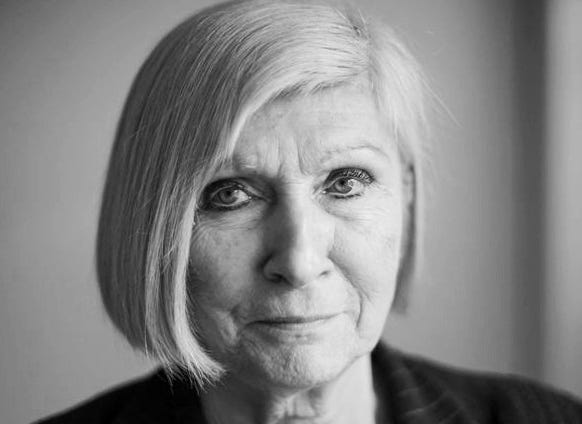
Enter Chantal Mouffe, a political theorist who looked at this unraveling world and offered a stark, yet profoundly insightful, diagnosis. She argued that the failure of politics to acknowledge and channel this inherent conflict doesn’t lead to peace. Instead, it turns those with differing views from mere opponents into existential threats, from adversaries into enemies. We are, quite literally, moving from debate to combat.
The Illusion of Universal Consensus
Modern liberalism, with its emphasis on rationality and universal values, often operates under the assumption that a fully inclusive, consensus-based society is not only possible but desirable. It posits a neutral public sphere where all voices can be heard, and through rational deliberation, a common good can be discovered and agreed upon. Sounds idyllic, doesn’t it?
But reality has a stubborn way of shattering such illusions. Look around: the extreme polarization and breakdown of civil discourse are undeniable. The political center, once a space for negotiation and compromise, has all but collapsed. Why? Because, as Mouffe suggests, this liberal framework ignores the fundamental role of passion, identity, and power in politics.
It overlooks the fact that political identity is often formed in opposition to “the other.” Pretending this doesn’t exist, or hoping it will vanish with enough dialogue, merely pushes these antagonisms underground, only for them to erupt with greater force later.
Agonism vs. Antagonism: The Critical Distinction
Mouffe’s core contribution is her distinction between “agonism” and “antagonism.” She isn’t advocating for an end to conflict; quite the opposite. She argues that a healthy democracy doesn’t eliminate conflict but provides institutional channels to manage it.
Agonism is conflict between adversaries. Adversaries recognize each other’s legitimacy within the shared political space, even if they fundamentally disagree on policies and visions for society. They fight passionately, but with respect for the rules of the game and the understanding that the other side also belongs. “We are in competition for power, but we are both part of this system.”
Antagonism, on the other hand, is conflict between enemies. Enemies see each other as threats to their very existence, as forces to be eradicated rather than debated. When politics fails to channel conflict agonistically, it inevitably spills over into antagonism.
The aim of a democratic politics is not to overcome conflict but to transform antagonism into agonism.
— Chantal Mouffe
We have lost the ability to disagree without destroying. When one side views the other not just as wrong, but as inherently evil or a danger to the nation, the possibility of shared governance evaporates. This is precisely when the failure of politics to channel conflict turns adversaries into enemies.
Navigating the Grey Zone
This descent into antagonism creates what many describe as a “Grey Zone” – a dangerous space where the clear lines between political opposition and existential threat blur. It’s a direct result of political failure, where the mechanisms designed to manage disagreement buckle under the weight of unacknowledged passions.
In this Grey Zone, we expect political violence to replace political debate. The language of war permeates our everyday discourse. Compromise is seen not as a virtue, but as a betrayal. The ‘other side’ is not just a political rival; it’s viewed as an existential threat to one’s values, one’s way of life, perhaps even one’s physical safety.
This is not hyperbole. We are living it. When the existence of the other becomes an unbearable challenge, the stage is set for an unraveling of democratic norms.
In a pluralist democracy, the political frontier cannot be eliminated, but it can be constantly moved and redrawn, preventing it from solidifying into an absolute division between “us” and “them.”
— Chantal Mouffe
Accepting the Permanence of Conflict
So, what do we do? Mouffe’s work isn’t a call to despair, but a pragmatic guide to understanding our current predicament. It requires a fundamental shift in perspective: we must accept the permanency of conflict. Conflict is not a bug in the democratic system; it’s a feature.
Our task is not to eliminate difference but to learn how to manage it respectfully, to foster agonism rather than succumb to antagonism. This means creating and reinforcing institutions, norms, and a political culture that encourages vigorous debate among adversaries, rather than outright war among enemies.
For individuals, this means developing a certain resilience and discernment. How do you avoid political crossfire when the lines are so blurred? It starts with recognizing the fundamental nature of the struggle:
Identify Antagonistic Rhetoric: Recognize when language shifts from policy disagreement to dehumanization and existential threats.
Support Agonistic Spaces: Champion platforms and practices that encourage genuine debate and respectful disagreement, even if it’s uncomfortable.
Guard Your Own Language: Be mindful of how you frame your opponents. Do you inadvertently contribute to the “enemy” narrative?
Seek Nuance: Resist the siren call of simplistic binaries that demand you pick an absolute side.
The greatest challenge of our time is not the presence of conflict itself, but our collective failure to process it without resorting to destructive antagonism.
Unlock deeper insights with a 10% discount on the annual plan.
Support thoughtful analysis and join a growing community of readers committed to understanding the world through philosophy and reason.
Conclusion: The Path Forward
Chantal Mouffe’s agonistic pluralism offers a sobering but essential lens through which to view our increasingly fractured world. Liberalism’s noble aspirations of universal consensus, while well-intentioned, inadvertently paved the way for the very breakdown we now face by denying the persistent role of power, passion, and division. By ignoring the irreducible nature of political conflict, we unwittingly transform spirited debates into existential battles, turning our fellow citizens into enemies.
The challenge before us is immense: to reclaim the ability to disagree fiercely yet respectfully, to recognize the legitimacy of our political adversaries, and to rebuild the democratic institutions that allow for creative, passionate, and yes, even conflictual engagement, without descending into outright war. It’s about building a better cage for our political beasts, rather than pretending they don’t exist. Only then can we hope to navigate this turbulent era without completely tearing ourselves apart.
Great principles. But it feels bleak. Even solutions feel like problems. This is a surprisingly optimistic take for something that seems endemic to the human condition. All important to consider. I’m mostly moved by pleas to support agonism, to promote constructive language. Easier said than done.
an interesting philosopher. And we all know who 'she's talking about' here....