


Imagine the opening scene of a grand play, where the stage is set for a vital public debate. Instead of dialogue, you hear only shouting. Instead of collaboration, you see only combatants. This isn’t a dystopian fiction; it’s the lived reality of modern democratic politics, a landscape increasingly dominated by the relentless, often brutal, tug-of-war between political parties. We’re told these parties are the lifeblood of representative government, the necessary conduits for diverse voices. But what if this widely accepted truth masks a more insidious reality? What if the very structures we rely upon to articulate our will are, in fact, the primary architects of our division, disillusionment, and democratic decay?
For many, the election cycle has become less an exercise in civic duty and more a ritual of dread, a biennial or quadrennial descent into partisan mudslinging that leaves us feeling exhausted, unrepresented, and cynical. This isn’t a coincidence. It’s the predictable outcome of a system where loyalty to a flag, a color, or a brand often supersedes the common good.
The Founders’ Fears and the Seeds of Division
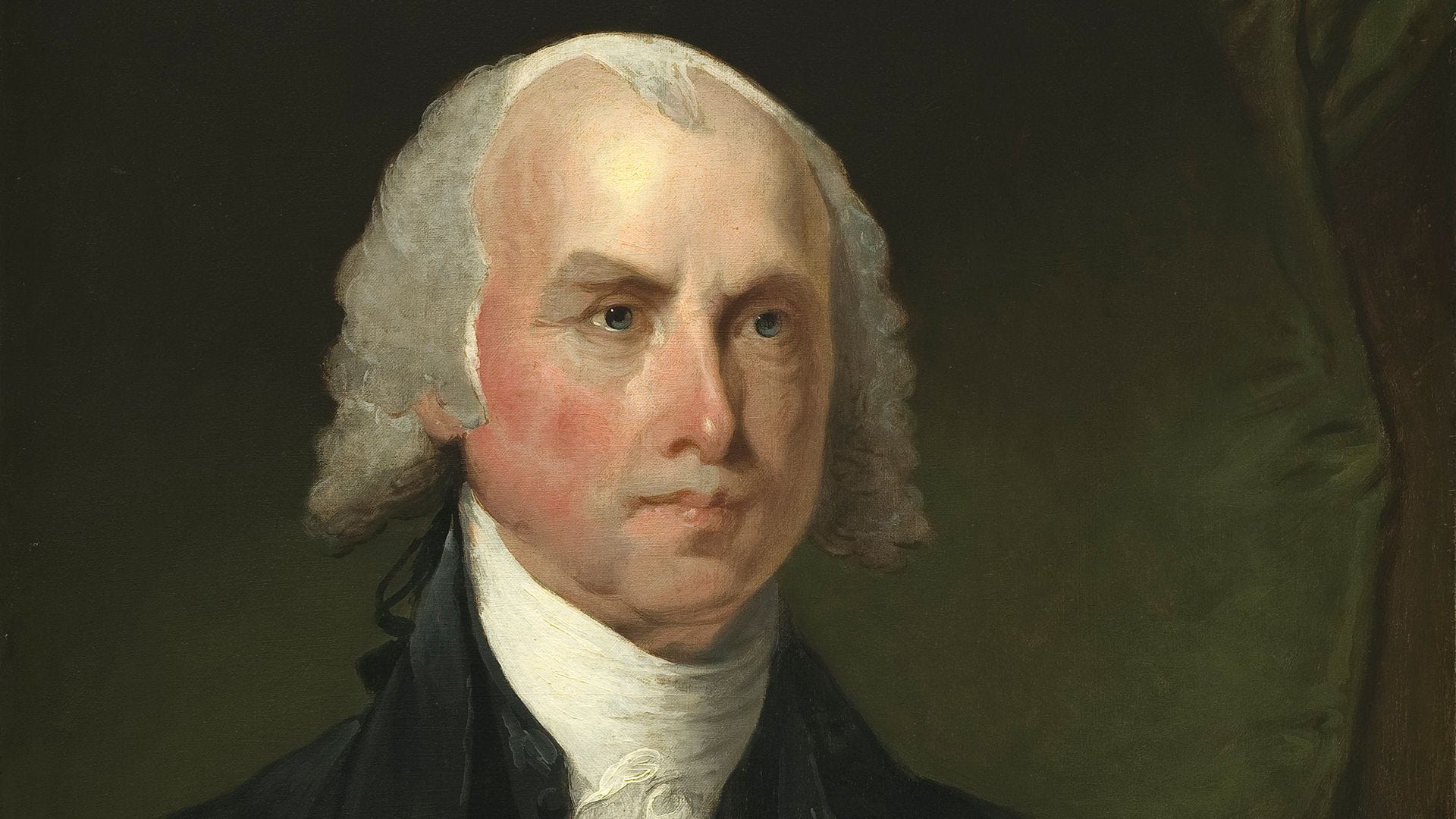
It’s easy to assume political parties have always been an integral part of democracy, but this is far from the truth. Many of the architects of modern democratic republics, particularly the American Founders, viewed “factions”—the precursor to parties—with profound suspicion. James Madison, in “Federalist No. 10”, famously described them as a “dangerous vice,” recognizing their inherent tendency to prioritize narrow group interests over the collective welfare. The system they designed was an intricate dance of checks and balances, precisely crafted to mitigate the power of any single faction and prevent its tyranny.
Yet, almost immediately after these republics were established, informal groupings coalesced, solidified, and eventually institutionalized into the political parties we recognize today. This deviation from the original vision—the belief that a robust republic could thrive without formalized, permanent party structures—is arguably one founding idea that explains today’s endless frustration with elections. We inherited a system built to resist factions, now almost entirely dominated by them, and the consequences are glaringly evident in our perpetually divided discourse.
There is nothing which I dread so much as a division of the republic into two great parties, each arranged under its leader, and concerting measures in opposition to each other. This, in my humble apprehension, is to be dreaded as the greatest political evil under our Constitution.
— John Adams
The Tribal Instinct and the Erosion of Nuance
Political parties aren’t merely organizational structures; they are identity factories. They compel allegiance, fostering an “us vs. them” mentality that often transcends policy differences and dives deep into primal tribal loyalty. Once you identify with a party, dissent within its ranks can feel like a betrayal, and agreement with the “other side” can be seen as weakness or apostasy. This psychological conditioning has several corrosive effects:
Simplification of Complex Issues: Nuance is the first casualty. Policies are reduced to slogans, and multifaceted problems are forced into rigid ideological boxes, making genuine understanding and compromise nearly impossible.
Demonization of Opponents: When the “other side” is not merely wrong but inherently bad, evil, or unpatriotic, respectful debate gives way to character assassination and moral condemnation. This makes any form of constructive engagement feel impossible.
Suppression of Independent Thought: Party lines become intellectual guardrails. Members are expected to conform to the party platform, and those who deviate often face ostracism or political marginalization, stifling innovation and critical thinking within the political sphere.
The Illusion of Choice and the Grip of Gridlock
We are frequently told that parties offer choice. But do they truly expand our options, or do they merely curate a narrow menu, forcing citizens to pick the “least bad” option presented by a duopoly? In many established democracies, the political spectrum has been dramatically compressed, leaving little room for truly novel approaches or solutions that transcend traditional divides.
Furthermore, party loyalty often trumps national interest, leading to systemic gridlock. Good ideas, regardless of their merit, can be shot down simply because they originated from the opposing side. This isn’t governance; it’s a perpetual campaign, where scoring political points often takes precedence over solving urgent societal problems.
The alternate domination of one faction over another, sharpened by the spirit of revenge, natural to party dissension, which in different ages and countries has perpetrated the most horrid enormities, is itself a frightful despotism.
— George Washington, Farewell Address
Money, Power, and the Political Machine
Modern political parties are also vast fundraising machines, perpetually hungry for capital to fuel their campaigns, advertising, and operations. This incessant need for funding inevitably leads to a reliance on wealthy donors, corporations, and special interest groups, distorting the democratic process. Policies can become commodities, and legislative priorities can shift to serve the interests of those who fund the party, rather than the broader public.
The quest for power also consolidates control, often through gerrymandering, voter suppression tactics, and the manipulation of media narratives. The goal ceases to be about effective governance and transforms into the singular objective of winning and retaining power at all costs.
Reclaiming The Democratic Spirit
We are witnessing a profound paradox: the very institutions meant to represent the public will have become the primary engines of its fragmentation. This isn’t to say that organized political thought is inherently bad, or that groups with shared interests shouldn’t coalesce. The problem arises when these groups become so entrenched, so self-serving, and so dominant that they suffocate genuine public discourse and compromise.
Perhaps it’s time to critically re-evaluate our unquestioning acceptance of party dominance. Can we imagine a democracy where:
Independent, issue-focused representation is prioritized over party loyalty?
Consensus-building mechanisms are built into the fabric of governance?
Citizens are encouraged to engage with ideas, not just tribal affiliations?
The frustration is real, and it stems from a system that often feels designed to divide rather than unite. Our task, as citizens, is to recognize this invisible war for our collective mind, to question the necessity of these divisions, and to demand a political landscape where the pursuit of the common good triumphs over partisan gain. The future of democracy may well depend on our willingness to look beyond the party lines and rediscover a shared humanity.
Ready for Deeper, Uncensored Philosophy?
If you enjoy Philosopheasy, you might love PhiloCrux — our private higher-tier platform.
Get weekly in-depth video masterclasses, deep-dive analyses, comprehensive study guides, and full access to The Vault: a private archive of 500+ deep-dive explorations. — all in a completely uncensored platform.
A separate, deeper tier for those who want more intensity and uncensored exploration
@philosopheasy writes about the tribalism that is undermining current politics.
I am working on a philosophical method that I will call Foundationalism. In a nutshell it centers the developing child to critique all areas of life.
Foundationalism would ask, "What produces the conditions under which tribal political identity becomes so psychologically necessary?" The answer points upstream — to the erosion of smaller-scale relational structures (family, neighborhood, civic association, congregation) that historically scaffolded the kind of stable attachment and reciprocal recognition that makes disagreement tolerable.
Scalable relational capacity beyond one's own "tribe" isn't a civic attitude that can be encouraged through better institutional design. It is a developmental achievement, built through experiences of successful repair across difference, of sustained exposure to others whose intentions must be interpreted rather than assumed hostile.