


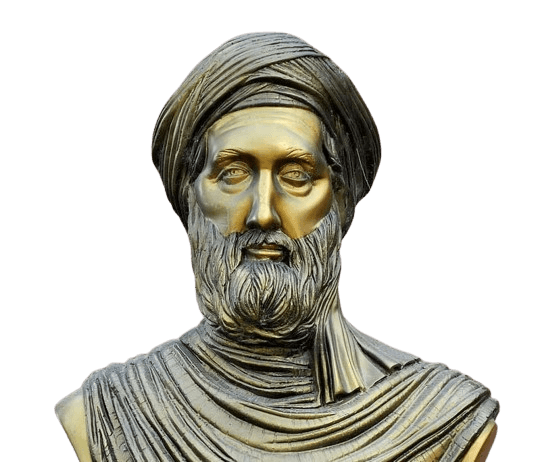
Over six centuries ago, in the midst of crumbling empires and shifting sands, the historian Ibn Khaldun diagnosed a terminal illness that plagues civilizations not in their infancy, but at the peak of their power. He argued that the very prosperity societies strive for—the comfort, the luxury, the ease—acts as a slow-acting poison, dissolving the communal strength and collective will that made greatness possible.
This is not a story of barbarian hordes at the gates, but of an internal decay, a spiritual sickness born from success. His work serves as a chilling mirror for the modern world, forcing us to ask whether our own unprecedented comfort has become a gilded cage, eroding the resilience we need to survive the very real crises on our horizon.
The Prophet of Decline: Who Was Ibn Khaldun?
Ibn Khaldun (1332 – 1406) is often hailed as the father of sociology and a pivotal figure in the understanding of historical dynamics, particularly regarding the rise and fall of civilizations. His most significant contribution, the Muqaddimah (Introduction), serves as both an introduction to his extensive historical narrative, Kitab al-‘Ibar, and a comprehensive examination of sociology, economics, and the philosophy of history. Khaldun’s analysis of civilization posits that the very comforts and luxuries that societies cultivate can undermine the social cohesion and collective strength that initially contribute to their rise, ultimately leading to their decline.
A key concept in Khaldun’s work is asabiyyah, or group solidarity, which he argues is essential for the sustainability of a civilization. As societies grow prosperous, a culture of comfort can foster complacency, eroding the sense of urgency and communal responsibility that binds individuals together. This dynamic is exemplified in his cyclical theory of history, wherein civilizations ascend through strong social bonds and collective effort, only to decline as comfort leads to moral decay and fragmentation.
Khaldun’s insights resonate strongly in contemporary discussions about societal sustainability, as the fragility of modern civilizations is often echoed in the themes he explored over six centuries ago. He warns that the luxuries of prosperity can breed complacency, detaching the populace from the struggles and responsibilities that once fostered unity and resilience. Thus, his work remains a critical lens through which to analyze the implications of comfort and social dynamics in both historical and modern contexts, challenging societies to remain vigilant against the threats of decline inherent in complacency.
Contributions to Sociology and History
Ibn Khaldun’s Muqaddimah is widely acknowledged for its innovative approach to understanding historical processes. He emphasized the significance of social, economic, and political contexts in shaping historical events, moving beyond mere chronological narratives to explore the underlying causes of the rise and fall of civilizations. His analysis introduced concepts such as asabiyyah (group feeling), which he argued was crucial for the ascent of new political powers and civilizations. This dynamic relationship between social cohesion and political strength is a central theme in his work.
Economic Insights
In addition to his sociological observations, Ibn Khaldun presented advanced economic theories for his time. He recognized the importance of economic factors in the development of civilizations, highlighting how the comforts provided by prosperity could, paradoxically, weaken the very foundations that support societal strength. This concept resonates with contemporary discussions about the fragility of modern civilizations, wherein ease and comfort might lead to complacency and decline.
Legacy and Influence
Ibn Khaldun’s influence extends beyond his lifetime; he is celebrated as a pioneer in various disciplines, including sociology, historiography, political science, and education. His work has been translated into numerous languages, significantly impacting scholars across both Eastern and Western traditions. Modern scholars have compared the Muqaddimah favorably with Machiavelli’s The Prince, asserting that Ibn Khaldun’s work provides a more nuanced understanding of historical causality based on cultural and sociological factors. The insights offered by Ibn Khaldun into the cyclical nature of civilizations, where the strength that builds societies can also lead to their downfall, continue to inform discussions on the sustainability of contemporary societies. His ability to analyze historical patterns and social dynamics remains relevant, as the challenges faced by modern civilizations echo the themes he explored over six centuries ago.
The Anatomy of Collapse
Civilization collapse refers to the breakdown of complex societies, resulting in significant changes across social, economic, and political structures. This phenomenon, while seemingly unimaginable to many today, is well-documented throughout history, with established civilizations experiencing profound declines. Societal collapse can be characterized by rapid
