


We live in a world mediated by screens, a seamless interface that promises connection and efficiency but often delivers a profound sense of alienation. It is the quiet despair of a day spent navigating digital abstractions, the feeling of being untethered from the tangible world and even from ourselves. Philosopher and craftsman Matthew Crawford offers a powerful diagnosis for this modern malaise: we are suffering from a deficit of reality. He argues that the only cure for the existential dread bred by our distraction-rich digital environments is to re-engage with the physical world, to get our hands dirty, and to rediscover the deep, grounding satisfaction of manipulating actual things.
Background: The Philosopher-Mechanic
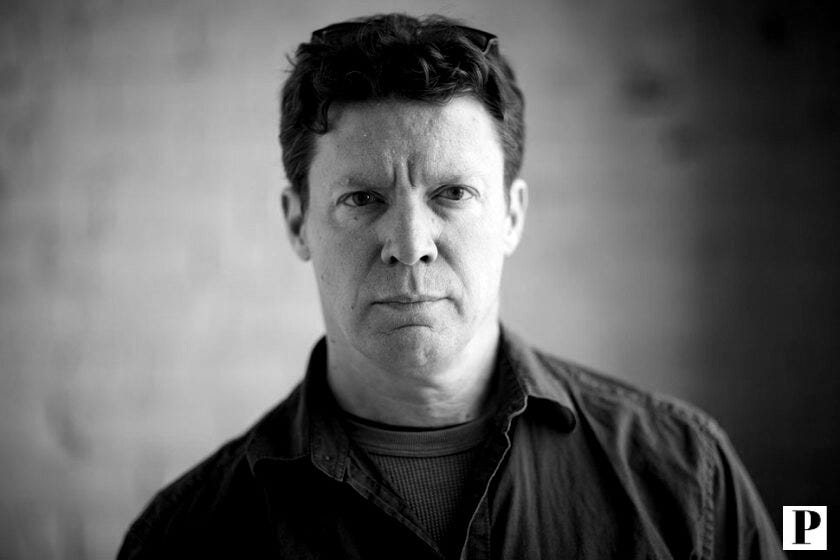
Matthew B. Crawford, a prominent philosopher and skilled fabricator, has gained recognition for his critical examination of modern distractions and their impact on individuality. In his seminal work, he articulates a compelling argument about the pervasive nature of attention commodification in contemporary society. He posits that our digital environment is rife with technologies designed to harvest our attention, ultimately robbing us of our mental autonomy and individuality.
Crawford draws from a rich philosophical tradition, linking his critiques to Enlightenment thinkers such as René Descartes and Immanuel Kant, who emphasized the importance of rational autonomy. However, he challenges this ideal by advocating for a return to concrete social practices and traditions, suggesting that true individuality can only emerge through a “dialectic with tradition,” where one learns and progresses through apprenticeship under the guidance of skilled mentors.
His background as a Senior Fellow at the Institute for Advanced Studies in Culture at the University of Virginia and as a fabricator of custom motorcycle components lends credibility to his insights. Crawford’s earlier work initiated a rethinking of educational and labor policies, reinforcing his position as a significant voice in discussions around work and individual fulfillment. In his work, Crawford proposes actionable strategies for reclaiming attention and fostering deeper engagement with one’s surroundings. He emphasizes the importance of actively shaping one’s environment to support focus and encourages practices that promote sustained attention, such as creating “zones of focus” and embracing moments of mental quietude. Through this work, Crawford contributes to an ongoing discourse about the interplay between technology, attention, and the essence of human individuality in the face of digital distractions.
The Thesis: Physical Work as Spiritual Remedy
Matthew Crawford’s work explores the profound impact of digital technology on our lives and argues for the necessity of engaging with the physical world to reclaim a sense of fulfillment and purpose. He posits that modern work, often mediated through screens, fosters alienation and diminishes the intrinsic value of labor. Crawford highlights that the disconnect between workers and the products of their labor can lead to feelings of unfulfillment and existential despair, a phenomenon closely linked to Marx’s concept of alienation in work.
Crawford further elaborates on the significance of “deep work,” as articulated by Cal Newport, contrasting it with “shallow work.” He contends that deep work—characterized by distraction-free concentration—can provide a richer, more meaningful experience than the often fragmented and superficial
