


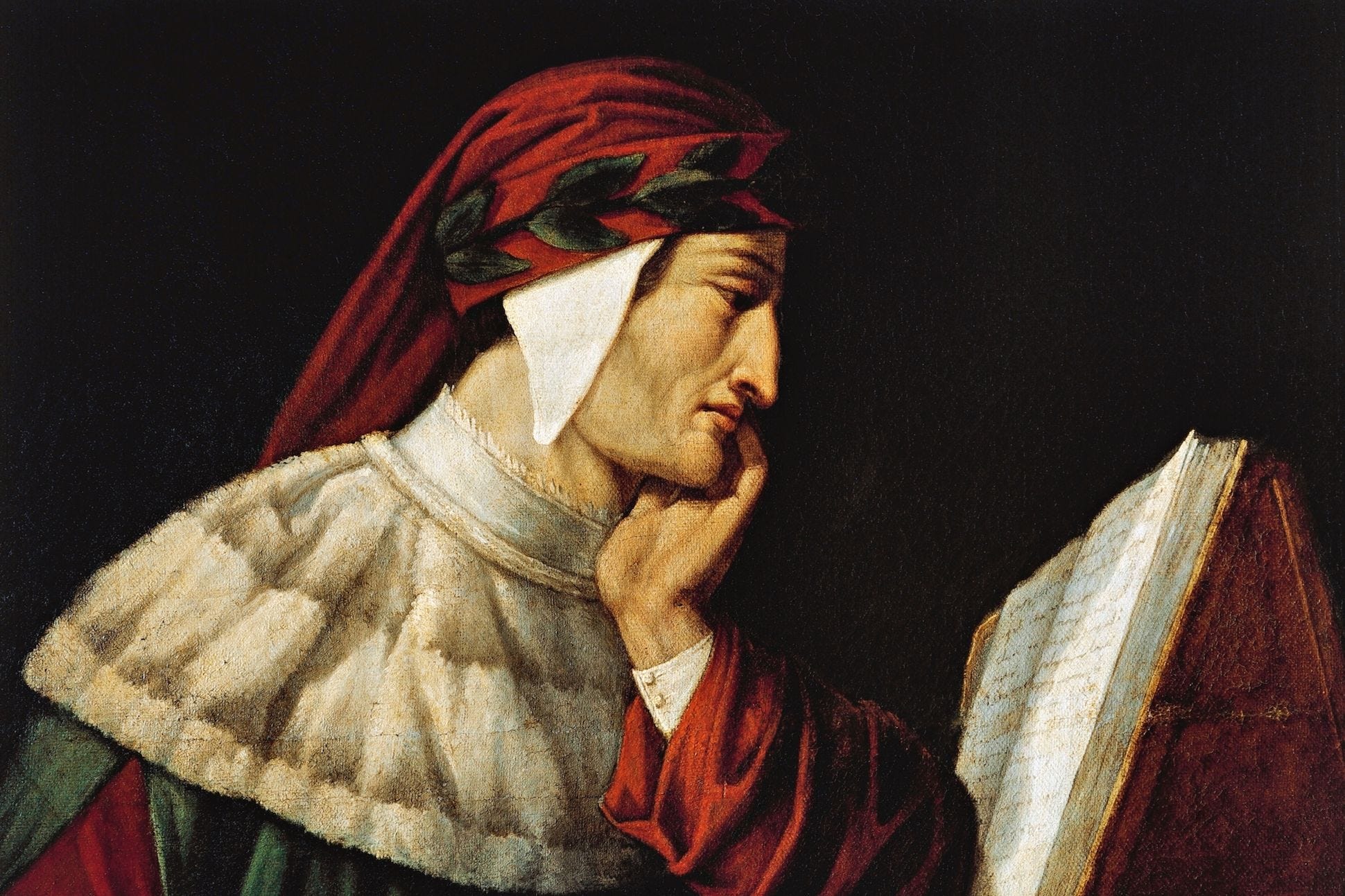
Remember the epic clash between Pope and Emperor? A world where two colossal powers vied for ultimate authority, shaping not just empires but the very souls of their subjects? For centuries, this was the central drama of Western civilization, leaving an indelible mark on law, philosophy, and everyday life.
Into this maelstrom stepped Dante Alighieri. His profound work, “De Monarchia,” wasn’t just a political treatise; it was an attempt to untangle the Gordian knot of medieval power. He proposed a revolutionary idea: two distinct “suns,” each sovereign in its own sphere. One, the spiritual authority of the Pope, guided humanity towards eternal salvation. The other, the temporal power of the Emperor, ensured earthly happiness and justice.
Dante’s genius lay in arguing for separation, not supremacy. Neither sun should eclipse the other. Instead, they should shine independently, yet in harmony, guiding humanity’s twin destinies for soul and body. But what if those suns, distinct yet intertwined, have risen again in a new sky?
The Echo of Empires: Dante’s Original Dilemma
Dante’s 14th-century world was riddled with the conflict between spiritual dogma and temporal law. The Pope claimed universal spiritual authority, often extending it to earthly matters, while emperors fought for a state unencumbered by ecclesiastical dictates. It was a battle for the very definition of human existence: were we primarily subjects of God, or citizens of a kingdom?
Two ends, therefore, have been laid down by divine providence to be pursued by man.
— Dante Alighieri, “De Monarchia”
His solution, radical for its time, called for each power to remain sovereign within its divinely appointed domain. The Pope cared for the soul, preparing it for heaven. The Emperor ensured peace and prosperity on Earth. This intellectual framework sought to prevent endless strife, providing clarity for individuals caught between two powerful, often conflicting, allegiances. It was a concordat of the ages, even if not perfectly realized.
The Digital Network and the Physical State
Fast forward to today, and Dante’s metaphor feels uncannily relevant. We live under two suns: The Physical State and the Digital Network. One governs the atoms of your existence, the other, the bits.
The Physical State, with its borders, laws, and institutions, controls your body. It demands taxes, enforces physical presence, and dictates what you can and cannot do in the tangible world. It’s the authority of the soil, demanding KYC for bank accounts, issuing passports, and ultimately, wielding physical force.
The Digital Network, a sprawling, borderless web of protocols, code, and information, guides your mind—your thoughts, your identity, your relationships, your very perception of reality. It’s the authority of the cloud, offering anonymity, facilitating global communication, and shaping narratives through algorithms. It’s where your digital “soul” resides.
Are they not fundamentally at war for your very being? The conflict is palpable:
Censorship vs. Encryption: The State attempts to control information flow and expression; encryption defends the right to private communication and uncensored thought.
KYC vs. Anonymity: The State demands identity verification for financial transactions and online services; the Network, through tools like cryptocurrency and VPNs, offers pseudonymity and privacy.
Neither can fully destroy the other. A State can unplug the internet, but the ideas and protocols persist, awaiting reconnection. A Network can route around censorship, but its users’ physical bodies remain subject to local laws. This is a fundamental conflict, a dual sovereignty that demands our recognition.
Citizens of Cloud and Soil
You are a citizen of the Cloud and the Soil, and these duties, increasingly, conflict. One sphere asks for transparency and accountability, the other for privacy and autonomy. How do you reconcile these demands when they pull in opposite directions?
This friction isn’t theoretical; it’s lived experience. Your digital footprint is increasingly scrutinized by the State, even as you seek freedom and connection within the Network. Your data, once private, becomes a commodity, a point of control. You navigate a landscape where a law in one physical jurisdiction can have profound implications for your global digital identity.
The internet is a vast, global, distributed consciousness that connects all people and all things, and it is fundamentally changing the way we think and interact.
— Vint Cerf
Dante’s solution was distinct spheres of influence, a recognition of separate yet legitimate authorities. Today, we need a Digital Concordat – an evolving, perhaps unwritten, understanding of the boundaries and responsibilities between the Physical State and the Digital Network. Until such a framework emerges, the burden falls squarely on you to forge your own personal philosophy for navigating this new reality.
Unlock deeper insights with a 10% discount on the annual plan.
Support thoughtful analysis and join a growing community of readers committed to understanding the world through philosophy and reason.
The Personal Battlefield
Until a grand concordat is signed, you are the battlefield. Your choices, your data, your online presence – all contested ground. The schism is here, unfolding in real-time, demanding active participation and conscious navigation.
Do you pick a side? Or do you attempt to play both, a diplomat of your own dual existence? Perhaps the most powerful principle in this new era is the ancient one, rephrased: Render unto Caesar what is Caesar’s, render unto Satoshi what is Satoshi’s. This isn’t about choosing one over the other; it’s about discerning the legitimate claims of each authority within their respective spheres.
Acknowledging this dual sovereignty is not merely an intellectual exercise; it is the first step in reclaiming agency in an increasingly fractured world. It requires vigilance, critical thinking, and a deliberate philosophy for how you exist across these two powerful, often contradictory, domains.
The digital revolution didn’t just change technology; it reshaped the very foundations of power and identity. Like Dante’s contemporaries, we stand at a crossroads, forced to define the boundaries of authority for the soul and the body in an age defined by both code and clay. Your navigation of this complex reality will define not just your future, but perhaps, the future of this new, two-sunned world.
Dante saw that peace required two authorities, not one will.
Today, we live the same tension: the State governs bodies, the Network shapes minds.
Freedom begins by recognizing where each power ends and where it must not rule.
Very interesting comparison . I was wondering if in the digital world algorithms are the equivalent of the other authority vs your own version of reality. They have started guiding what shows up the best and takes control from you to a certain extent . In Dante's world too, the control was either with thr Pope or the emperor not with the common people in its true sense